Grape variety
Cabernet Sauvignon
赤霞珠chìxiázhū
China's most planted red grape and the backbone of its best reds
- Type
- Grape variety
- Colour
- red
- Family
- The classics
- Origin
- Bordeaux, France
- Literal meaning
- Red cloud pearl
Taste profile
Body
LightFullBody: 4 out of 5Tannin
LowHighTannin: 4 out of 5Acidity
LowHighAcidity: 3 out of 5Fruit
SubtleIntenseFruit: 4 out of 5
Aromas
- blackcurrant
- black cherry
- cedar
- tobacco
- dark chocolate
- Blackcurrant and black cherry
- with cedar
- tobacco and
- after oak ageing
- coffee and dark chocolate.
Sweetness · dry
Blackcurrant and blackberry, cedar and sometimes a touch of green pepper or mint, with firm tannins that soften with age.
Cabernet Sauvignon is the king of Chinese vineyards. With around 60,000 hectares, it is by far the country's most planted red grape and the backbone of its most famous wines, including the Jia Bei Lan 2009 that won China's first top international trophy. Its Chinese name, 赤霞珠, means 'red cloud pearl'.
The model
When China built its modern wine industry, Bordeaux was the model, and Cabernet Sauvignon was the obvious choice. Today it is by far China's most planted wine grape, with around 60,000 hectares.
The wines that made history
China's most famous wines are Cabernet-based: Jia Bei Lan by Helan Qingxue, which won an International Trophy in London in 2011; Ao Yun, from the Himalayan foothills of Yunnan; and many of Ningxia's classified estates.
A Chinese accent
In the high desert of Ningxia and Xinjiang, intense sunshine ripens the grapes fully, while cold nights keep freshness. At altitude in Yunnan, the wines gain concentration. The best Chinese Cabernets combine New World ripeness with a structure that reminds many tasters of Bordeaux.
History in China
Modern Chinese winemaking began in 1892, when Zhang Bishi founded Changyu in Yantai, Shandong, and imported hundreds of thousands of European vines. Many failed to adapt, and he grafted them onto hardy wild vines from northeast China to save the venture.
Cabernet Sauvignon became China's leading red grape with the growth of the modern wine industry. Its prestige, its association with Bordeaux and its ability to ripen in very different climates made it the first choice for new vineyards from Shandong to Xinjiang. In 2011, a Cabernet-led blend from Ningxia, Helan Qingxue's Jia Bei Lan 2009, won an International Trophy at the Decanter World Wine Awards, proving that China could make world-class Cabernet.
Growing
In Ningxia and the other northern regions, vines must be buried every winter to survive temperatures below –20 °C. The yearly bending weakens the trunks, so vines rarely live beyond about twenty years. Helan Qingxue replanted its Cabernet in 2013 with French CS169 clones grafted onto 5BB rootstock.
The climate gives Chinese Cabernet a particular character. According to Professor Li Demei, the high altitude and cool nights of Ningxia mean that this late-ripening grape can show cool-climate flavours, despite the region's abundant sunshine.
Cabernet Sauvignon is not only made into red wine in China: Changyu's Longyu estate in Ningxia makes a dry white from it, pressing the free-run juice of the black grapes before the skins can give colour.
Where it grows
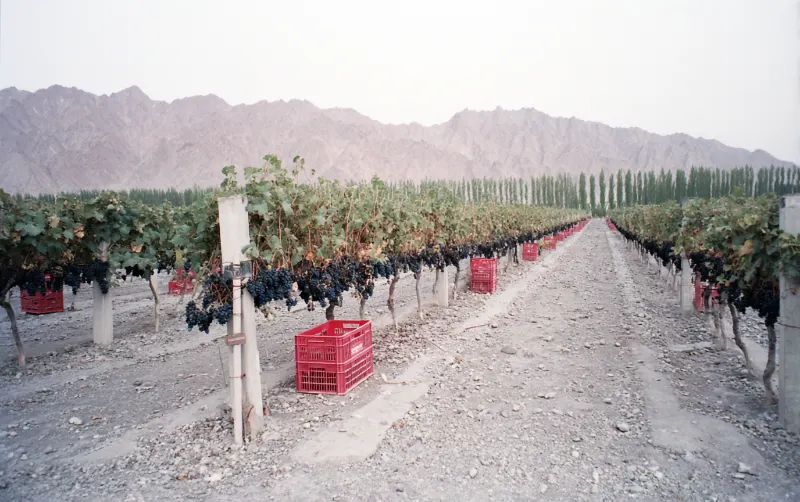
Ningxia
宁夏
Helan Mountain East · 贺兰山东麓 · Hèlánshān dōnglù
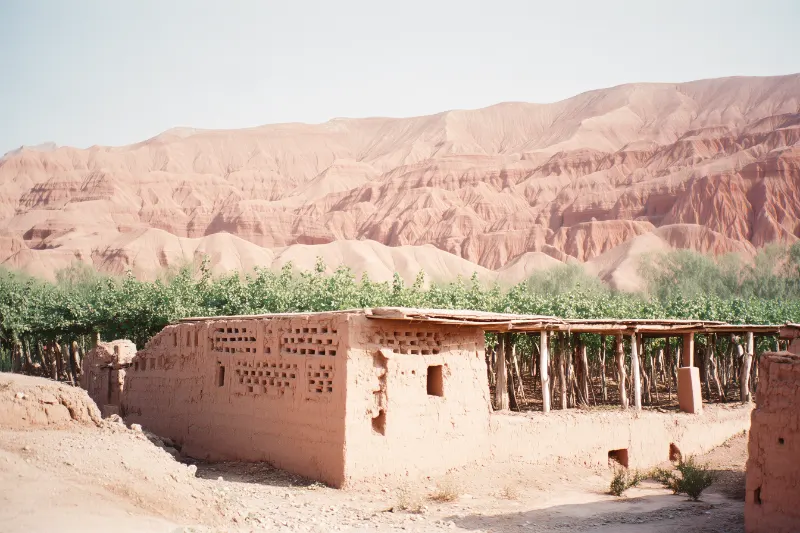
Xinjiang
新疆
Desert vineyards of the Tianshan Mountains · 天山 · Tiānshān
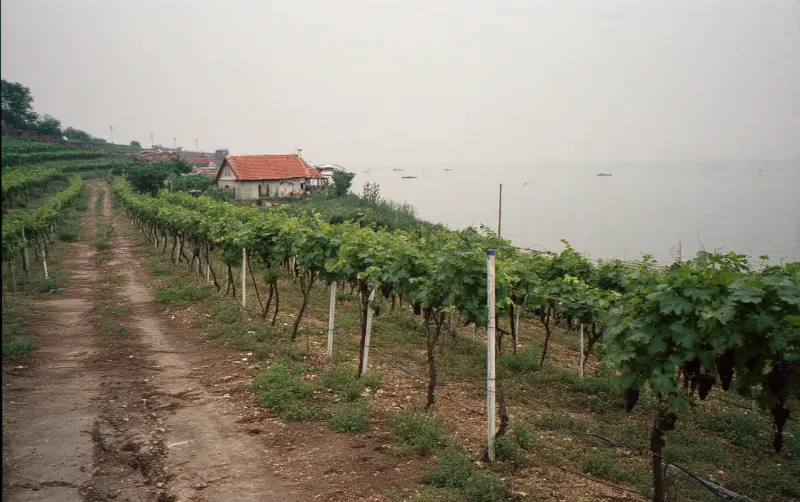
Shandong
山东
Yantai and Penglai · 烟台 · 蓬莱 · Yāntái · Pénglái
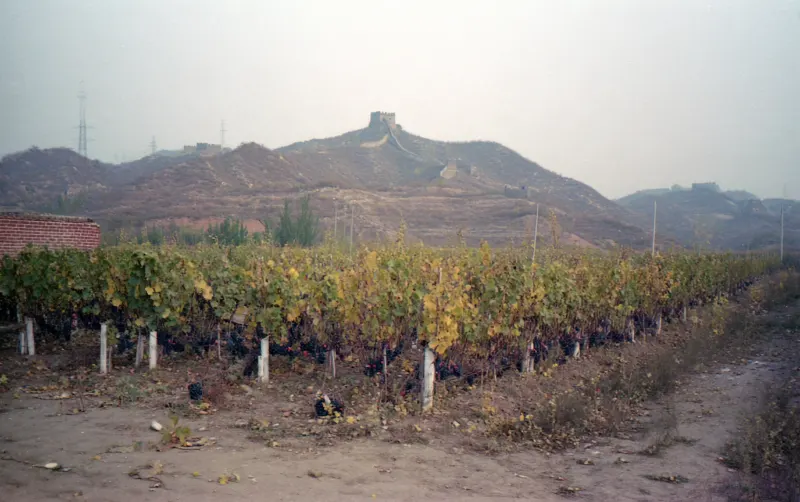
Hebei
河北
Huailai and Changli · 怀来 · 昌黎 · Huáilái · Chānglí
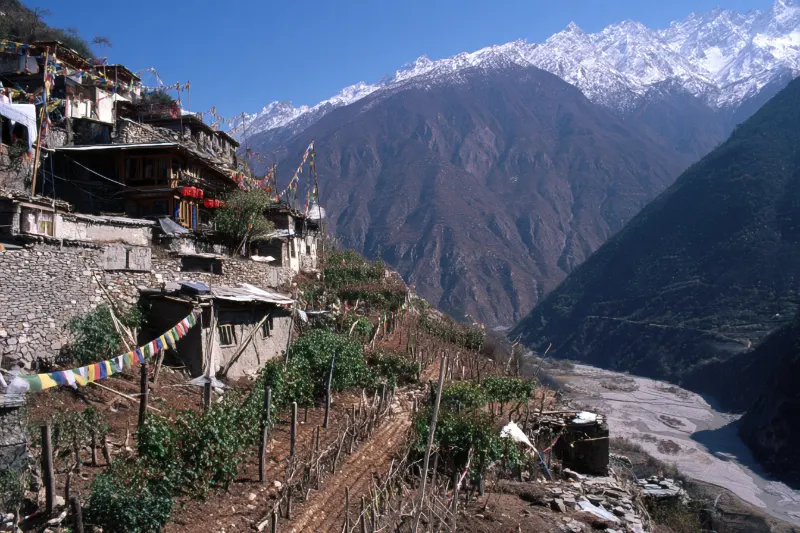
Yunnan
云南
Shangri-La and the Himalayan foothills · 香格里拉 · Xiānggélǐlā
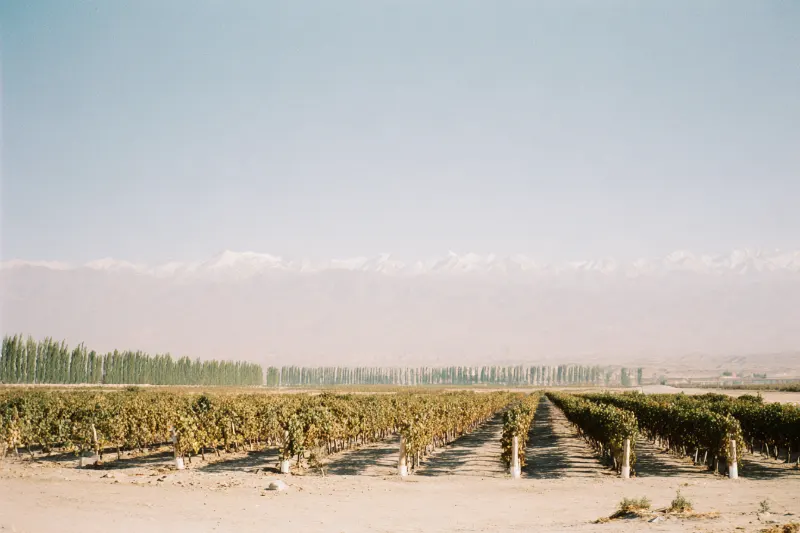
Gansu
甘肃
The Hexi Corridor · 河西走廊 · Héxī zǒuláng
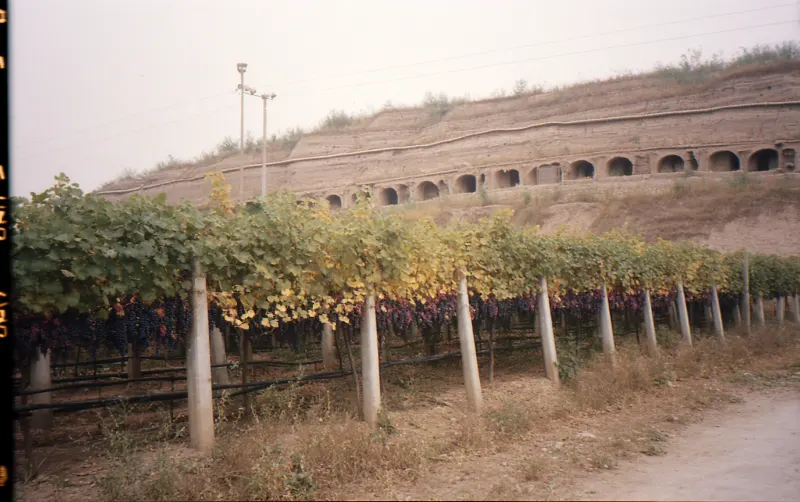
Shanxi
山西
The Taiyuan Basin and the Loess Plateau · 太原盆地 · Tàiyuán péndì
Producers known for it
Yunnan
Ao Yun
敖云
Flying above the clouds: China's most collectable wine
Shandong
Changyu
张裕
China's first modern winery, founded in 1892, and still its largest wine company
Xinjiang
Chateau Changyu Baron Balboa
张裕巴保男爵酒庄
Changyu's estate in Shihezi, at the northern foot of the Tianshan Mountains in Xinjiang
Ningxia
Chateau Changyu Moser XV
张裕摩塞尔十五世酒庄
China's oldest wine company meets Austrian wine tradition in Ningxia
Ningxia
Chateau Hedong
贺东庄园
One of Ningxia’s oldest estates, with vines more than a century old
Shanxi
Chateau Rongzi
戎子酒庄
A Loess Plateau estate in southern Shanxi, advised by the former winemaker of Pétrus
Hebei
Chateau Sungod
长城桑干酒庄
Great Wall's historic estate in Huailai, where China's modern wine research began
Xinjiang
CITIC Niya
尼雅
One of the major producers of Xinjiang's Tianshan North Foothills
Ningxia
Copower Jade
A Yongning estate built from scratch in 2012, with an Uluru-inspired winery and award-winning Syrah
Shandong
Domaine de Long Dai
珑岱
Château Lafite's Chinese estate, on granite terraces by the sea
Hebei
Domaine Franco-Chinois
中法庄园
Born from a pact between two governments, the estate that brought Marselan to China
Shanxi
Grace Vineyard
怡园酒庄
China's pioneering family boutique winery, born in coal country
Hebei
Great Wall
长城
COFCO's historic wine brand, born at the foot of the Great Wall in 1983
Gansu
Guofeng
国风庄园
A large Hexi Corridor estate in Zhangye, on the old Silk Road
Ningxia
Helan Mountain
贺兰山
Pernod Ricard's Ningxia winery, one of the region's first international investments
Ningxia
Helan Qingxue
贺兰晴雪
The boutique estate whose 2011 trophy put Chinese wine on the world map
Shandong
Huadong Parry Winery
华东
The Qingdao winery founded by Englishman Michael Parry, a pioneer of Chinese Chardonnay and Riesling
Ningxia
Kanaan Winery
迦南美地
The "crazy" idea that became one of Ningxia's top estates
Ningxia
Lansai Winery
A family estate in Jin-style architecture, with one of Ningxia's top Cabernets
Ningxia
Legacy Peak
留世酒庄
The 1997 vineyard behind some of Ningxia's first famous wines
Ningxia
Longyu Estate
龙谕酒庄
Changyu's high-end Ningxia estate, among the Chinese wines best known abroad
Gansu
Mogao
莫高
Gansu's best-known winery, and China's champion of Pinot Noir
Yunnan
Shangri-La Winery
香格里拉酒业
The local wine company of north-west Yunnan, partner of Moët Hennessy in Ao Yun
Ningxia
Silver Heights
银色高地
The boutique estate that opened the door for fine Chinese wine
Xinjiang
Tiansai Vineyards
天塞酒庄
An organic oasis in the Gobi, named after a camera lens
Xinjiang
Xiangdu Winery
乡都酒业
The pioneer of the Yanqi Basin, the first to plant vines on its wasteland
Yunnan
Xiaoling Estate
霄岭
Cloud-kissed peaks: high-altitude wines in the footsteps of the French missionaries
Ningxia
Xige Estate
西鸽酒庄
One of China's largest and fastest-growing fine-wine estates, a champion of Cabernet Gernischt
Xinjiang
Zhongfei Winery
中菲酒庄
A vineyard won from the Gobi, stone by stone, in Xinjiang’s Yanqi Basin
Pairs with
Food pairings
- A natural match for Ningxia and Xinjiang lamb, from cumin skewers to roast leg. Riper, oaked examples also suit red-braised pork belly and other rich, slow-cooked meats.
Sources
- Shape-shifter: a deep dive into Chinese Marselan's many looks — The Drinks Business, 2025
- Ningxia: China's rapidly emerging fine wine region — Decanter, 2024
- Ten years on: Chinese wine's breakthrough moment at DWWA — Decanter, 2021
Similar ingredients
马瑟兰
RED
Marselan
A French grape that may become China's signature
蛇龙珠
RED
Cabernet Gernischt
China's mystery grape, revealed by DNA to be Carmenère
小芒森
WHITE
Petit Manseng
A French white turning into one of China's most exciting wines
美乐
RED
Merlot
The soft partner of Cabernet in China's Bordeaux-style blends
霞多丽
WHITE
Chardonnay
China's leading white grape, for still and sparkling wines
雷司令
WHITE
Riesling
A German classic that pioneers are proving can thrive in China