Grape variety
Marselan
马瑟兰mǎsèlán
A French grape that may become China's signature
- Type
- Grape variety
- Colour
- red
- Family
- China's signatures
- Origin
- France: a cross of Cabernet Sauvignon and Grenache, created in 1961
- In China since
- 2001
- Literal meaning
- Phonetic transcription
Taste profile
Body
LightFullBody: 4 out of 5Tannin
LowHighTannin: 3 out of 5Acidity
LowHighAcidity: 3 out of 5Fruit
SubtleIntenseFruit: 4 out of 5
Aromas
- violet
- red berries
- blueberry
- blackcurrant
- spice
- Floral notes and red fruit from Grenache
- with blue and black fruit from Cabernet Sauvignon.
Sweetness · dry
Deep purple, with ripe black cherry and raspberry, spice, often a hint of mint or lavender, and soft, supple tannins. Generous but rarely heavy.
Marselan is a French grape that has found its true home in China. Created in France in 1961 by crossing Cabernet Sauvignon with Grenache, it arrived in China in 2001 and has since spread to every major wine region. China now has more Marselan than any country except France, and many producers and critics see it as the grape that could give Chinese wine its own identity, the way Malbec did for Argentina.
A French grape nobody wanted
In 1961, the French researcher Paul Truel crossed Cabernet Sauvignon with Grenache, looking for a grape with the elegance of the first and the heat resistance of the second. It was named after Marseillan, a small town on the Mediterranean coast. In France it remained a minor grape, rarely named on a label.
A second life in China
In 2001 a Sino-French project planted the first 2.75 hectares of Marselan in China, in Huailai, north-west of Beijing. The first wines, made by Professor Li Demei, impressed everyone. Today China has several thousand hectares of Marselan, more than any country except France, spread across its most diverse regions, from the humid coast of Shandong to the deserts of Ningxia and Xinjiang. Even the Rothschilds of Château Lafite include it in their Chinese wine, Long Dai. Every year on 27 April, the wine world celebrates World Marselan Day.
Why it works in China
Small berries give deep colour and aroma; good disease resistance helps in humid areas; heat tolerance helps in the desert. It adapts to almost everything China can throw at it.
History in China
Marselan was created in 1961 by the French ampelographer Paul Truel, working with the research institute INRA, and named after Marseillan, a coastal town near the Domaine de Vassal research vineyard. In France it remained a minor variety.
Its Chinese story began with a cooperation agreement between the Chinese and French governments, signed in 1999, which created the Sino-French Demonstration Vineyard in Huailai, Hebei, today's Domaine Franco-Chinois. On 13 April 2001, 80,525 vine cuttings arrived from France, including 10,525 of Marselan; they were planted that May on 2.75 hectares. The vineyard's chief winemaker was Li Demei, often called the father of Marselan in China. The first harvest came in 2003, and China's first 100% Marselan followed in 2004.
In 2004 COFCO, owner of the GreatWall brand, also introduced Marselan in Penglai, Shandong. From there the grape spread across the country. Today China has around 4,000 hectares, about 3.8% of its vineyard. In 2023 Ningxia hosted the world's first competition dedicated to the grape, The Marselan Selection; the 2024 edition received more than 330 entries from 12 countries.
Growing
Marselan adapts well to China's very different climates, from the semi-arid hills of Huailai to the deserts of Xinjiang and the foothills of Ningxia. Its small berries give deeply coloured wines, and the variety ripens reliably. As Professor Li Demei has observed, no country has yet claimed it as its signature grape, which is an opportunity for China.
Where it grows
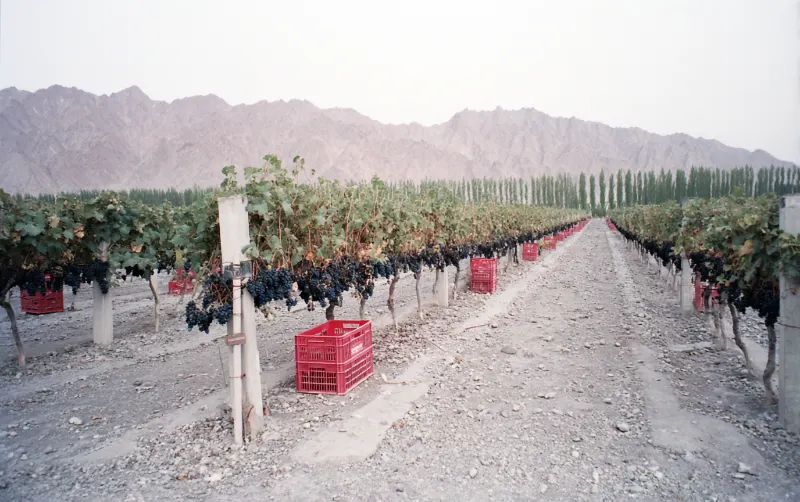
Ningxia
宁夏
Helan Mountain East · 贺兰山东麓 · Hèlánshān dōnglù
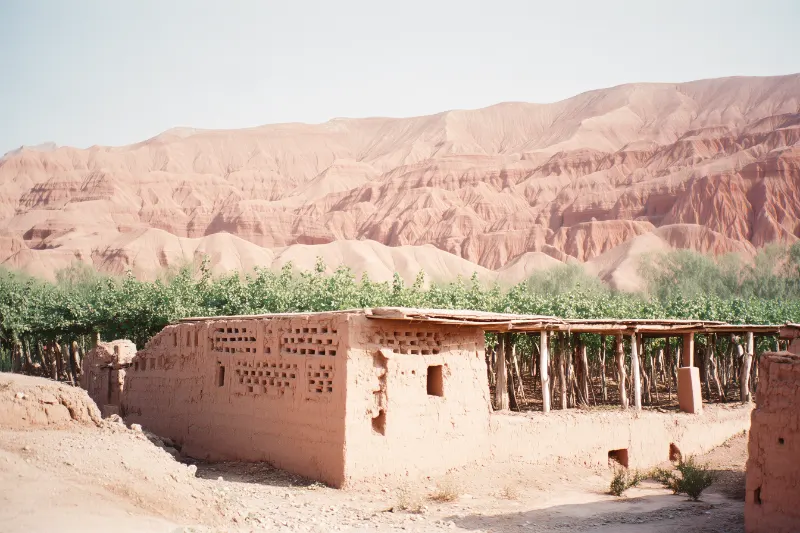
Xinjiang
新疆
Desert vineyards of the Tianshan Mountains · 天山 · Tiānshān
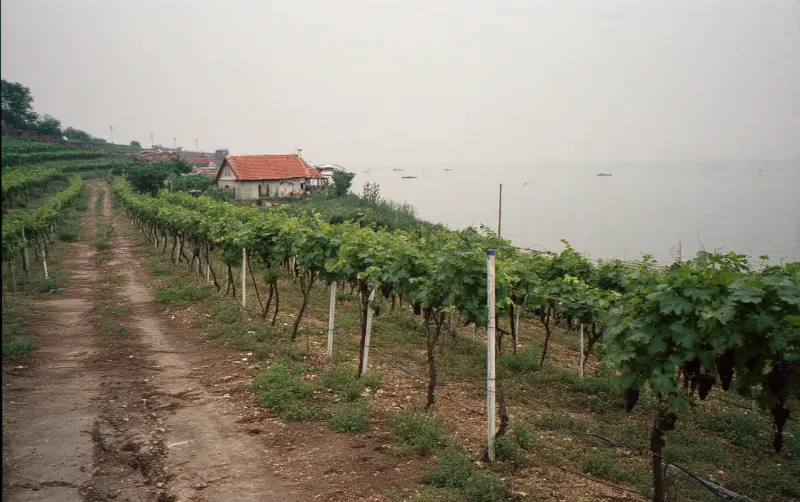
Shandong
山东
Yantai and Penglai · 烟台 · 蓬莱 · Yāntái · Pénglái
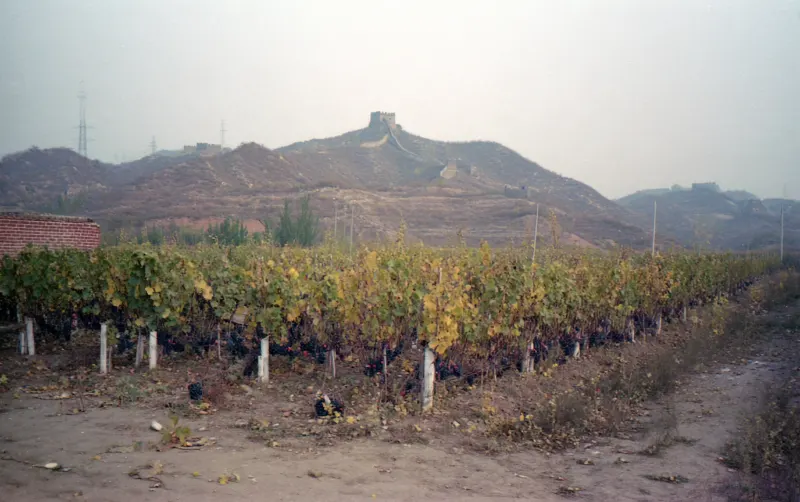
Hebei
河北
Huailai and Changli · 怀来 · 昌黎 · Huáilái · Chānglí
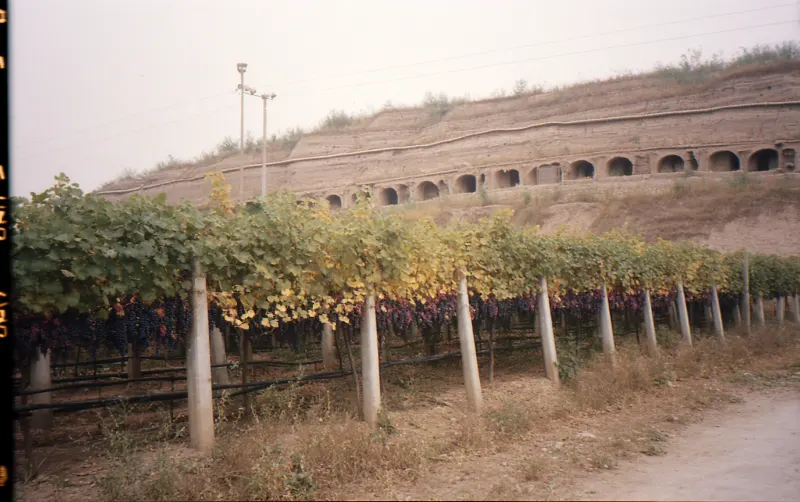
Shanxi
山西
The Taiyuan Basin and the Loess Plateau · 太原盆地 · Tàiyuán péndì
Producers known for it
Hebei
Canaan Winery
诗百篇
A world-class wine estate built from scratch, 80 km from Beijing
Ningxia
Chateau Hedong
贺东庄园
One of Ningxia’s oldest estates, with vines more than a century old
Shandong
Domaine de Long Dai
珑岱
Château Lafite's Chinese estate, on granite terraces by the sea
Hebei
Domaine Franco-Chinois
中法庄园
Born from a pact between two governments, the estate that brought Marselan to China
Shanxi
Grace Vineyard
怡园酒庄
China's pioneering family boutique winery, born in coal country
Ningxia
Helan Qingxue
贺兰晴雪
The boutique estate whose 2011 trophy put Chinese wine on the world map
Xinjiang
Tiansai Vineyards
天塞酒庄
An organic oasis in the Gobi, named after a camera lens
Xinjiang
Zhongfei Winery
中菲酒庄
A vineyard won from the Gobi, stone by stone, in Xinjiang’s Yanqi Basin
Pairs with
Food pairings
- Fruit-forward and spicy enough for Chinese cooking: Peking duck, where the fruit meets the sweet sauce and the acidity cuts the fat; big plate chicken from Xinjiang; cumin lamb skewers.
Sources
- Could Marselan become China's flagship grape? — Club Oenologique
- Marselan: The future 'signature' grape of China — Decanter China
- Marselan: Why it could be a 'signature grape' of Chinese wines — Decanter China
- Shape-shifter: a deep dive into Chinese Marselan's many looks — The Drinks Business, 2025
- Domaine Franco-Chinois turns 25 — Vino Joy News, 2024
- Marselan: The 'Chinese' grape — Ch'ng Poh Tiong
- Ten years on: Chinese wine's breakthrough moment at DWWA — Decanter, 2021
Similar ingredients
蛇龙珠
RED
Cabernet Gernischt
China's mystery grape, revealed by DNA to be Carmenère
小芒森
WHITE
Petit Manseng
A French white turning into one of China's most exciting wines
赤霞珠
RED
Cabernet Sauvignon
China's most planted red grape and the backbone of its best reds
美乐
RED
Merlot
The soft partner of Cabernet in China's Bordeaux-style blends
霞多丽
WHITE
Chardonnay
China's leading white grape, for still and sparkling wines
雷司令
WHITE
Riesling
A German classic that pioneers are proving can thrive in China