Grape variety
Pinot Noir
黑比诺hēibǐnuò
Burgundy's great red grape, finding a cool corner of China in the Hexi Corridor
- Type
- Grape variety
- Colour
- red
- Family
- Other reds
- Origin
- France: Burgundy
- Synonyms
- Pinot Nero, Spätburgunder, Blauburgunder
- Literal meaning
- 'Black Pinot': 黑 means black, 比诺 is a phonetic rendering of Pinot
Taste profile
Body
LightFullBody: 2 out of 5Tannin
LowHighTannin: 2 out of 5Acidity
LowHighAcidity: 4 out of 5Fruit
SubtleIntenseFruit: 3 out of 5
Aromas
- red cherry
- raspberry
- strawberry
- mushroom
- forest floor
- Red cherry
- raspberry and strawberry
- with earthy notes of mushroom and forest floor as the wine ages.
Sweetness · dry
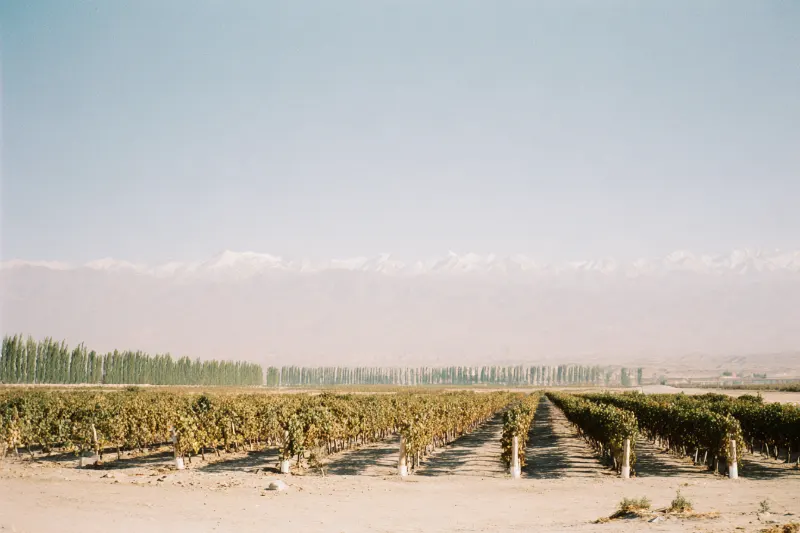
Pinot Noir is the red grape of Burgundy and one of the most demanding varieties in the world: thin-skinned, early-ripening and happiest in cool climates. In a country dominated by Cabernet Sauvignon, it is a minority grape, but it has found a home in the cooler Hexi Corridor of Gansu, where it is considered one of the region's best performers, and it is also grown in Ningxia, both for still reds and for traditional-method sparkling wine.
The cool-climate grape
Pinot Noir is famous for the great red wines of Burgundy and is one of the three main grapes of Champagne. It ripens early and has thin skins, so it needs a cool climate to keep its freshness and aromatic finesse. That makes it a challenge in much of China, where summers are hot and sunny.
The Hexi Corridor connection
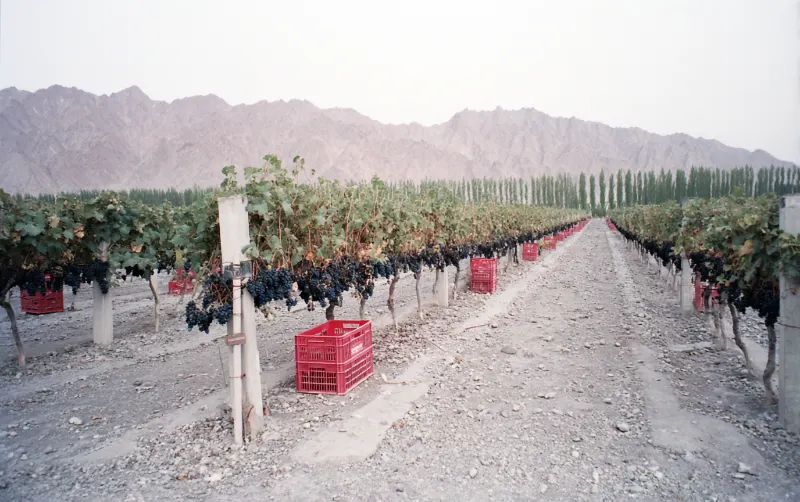
The region where Pinot Noir feels most at home in China is the Hexi Corridor in Gansu, the cool, dry strip of oases along the old Silk Road. Decanter describes Pinot Noir and Welschriesling as the region's top performers. Mogao, the corridor's best-known winery, founded in Wuwei in the early 1980s, has made the Pinot family one of its specialities: its 30 Years Old Vine Pinot Noir 2019 won a Bronze medal at the Decanter World Wine Awards 2026, a rare example in China of wine from vines of that age.
Ningxia and the north
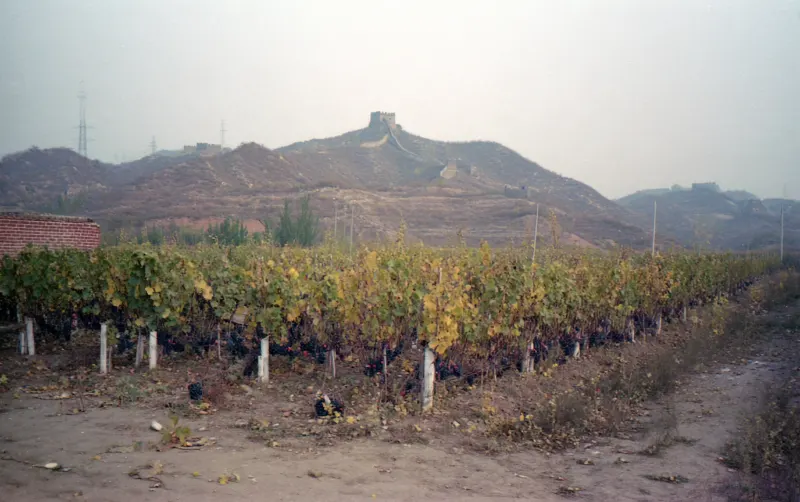
In Ningxia, several estates have taken on the challenge. Silver Heights makes a Pinot Noir called Jia Yuan, and Chandon China, Moët Hennessy's sparkling-wine estate opened in 2013, uses Pinot Noir with Chardonnay for its traditional-method sparkling wines. Near Beijing, Canaan Wine Estate in Huailai has also produced a Pinot Noir.
What to expect
Chinese Pinot Noir is usually lighter in colour and body than the country's Cabernet-based reds, with red-fruit aromas and soft tannins. The best examples show the freshness and delicacy that make the grape so loved elsewhere.
History in China
Pinot Noir has never been a major grape in China, where Cabernet Sauvignon has dominated since the modern wine industry began. Its most consistent home has been the Hexi Corridor of Gansu, where Mogao, founded in Wuwei in the early 1980s, turned to the Pinot family rather than the Bordeaux varieties chosen by most Chinese wineries.
In the 2010s, Pinot Noir gained new attention in Ningxia. Chandon China, inaugurated by Moët Hennessy in 2013 near Yinchuan, chose the two classic Champagne grapes, Chardonnay and Pinot Noir, for its sparkling wines, and boutique estates such as Silver Heights began to make still Pinot Noir.
Growing
Pinot Noir needs a long, cool growing season and is sensitive to heat and to rain at harvest. In China it does best in cooler, dry places such as the Hexi Corridor, where irrigation from Qilian Mountains snowmelt and cool nights help it keep its freshness, while late-ripening varieties there can struggle to ripen. As in all of northern China, the vines are buried in winter.
Where it grows
Producers known for it
Ningxia
Chandon China
夏桐
Moët Hennessy's sparkling-wine estate in Ningxia, China's first premium sparkling house
Ningxia
Chateau Hedong
贺东庄园
One of Ningxia’s oldest estates, with vines more than a century old
Gansu
Guofeng
国风庄园
A large Hexi Corridor estate in Zhangye, on the old Silk Road
Ningxia
Helan Mountain
贺兰山
Pernod Ricard's Ningxia winery, one of the region's first international investments
Ningxia
Helan Qingxue
贺兰晴雪
The boutique estate whose 2011 trophy put Chinese wine on the world map
Ningxia
Lansai Winery
A family estate in Jin-style architecture, with one of Ningxia's top Cabernets
Gansu
Mogao
莫高
Gansu's best-known winery, and China's champion of Pinot Noir
Shanghai
Peddlers Gin
Shanghai's pioneering craft gin, inspired by the city's old street peddlers
Hebei
Canaan Winery
诗百篇
A world-class wine estate built from scratch, 80 km from Beijing
Ningxia
Silver Heights
银色高地
The boutique estate that opened the door for fine Chinese wine
Food pairings
- Peking duck, where the red fruit meets the sweet sauce.
- Mushroom dishes and steamed chicken.
- Roast duck and other poultry.
Sources
- China – Around the wine regions — Decanter, 2024
- Wine on the Chinese Silk Road — The Drinks Business, 2015
- Mogao, 30 Years Old Vine Pinot Noir, Wuwei, Gansu, China 2019 (DWWA 2026 Bronze) — Decanter China, 2026
- Pinot Noir Day! China riffs on Burgundy's favorite grape — Grape Wall of China
- Chandon pioneers premium sparkling wine in China — LVMH, 2013
- Chinese wine regions: Hexi Corridor — Wynn Signature Chinese Wine Awards
Similar ingredients
马瑟兰
RED
Marselan
A French grape that may become China's signature
蛇龙珠
RED
Cabernet Gernischt
China's mystery grape, revealed by DNA to be Carmenère
小芒森
WHITE
Petit Manseng
A French white turning into one of China's most exciting wines
赤霞珠
RED
Cabernet Sauvignon
China's most planted red grape and the backbone of its best reds
美乐
RED
Merlot
The soft partner of Cabernet in China's Bordeaux-style blends
霞多丽
WHITE
Chardonnay
China's leading white grape, for still and sparkling wines