Grape variety
Amur grape
山葡萄shānpútáo
China's wild mountain grape, the toughest vine in the world against cold
- Type
- Grape variety
- Colour
- red
- Family
- Native to the north-east
- Origin
- Native to north-east China, eastern Inner Mongolia, the Russian Far East and Korea
- In China since
- Native
- Main regions
- Heilongjiang, Liaoning
- Synonyms
- Vitis amurensis, Amur grape
- Literal meaning
- 'Mountain grape'
Taste profile
Body
LightFullBody: 2 out of 5Tannin
LowHighTannin: 3 out of 5Acidity
LowHighAcidity: 5 out of 5Fruit
SubtleIntenseFruit: 4 out of 5
Aromas
- wild berries
- blackcurrant
- cherry
- earth
- Wild dark berries and sour cherry
- with an earthy edge and very high acidity.
Sweetness · often sweet
The Amur grape, Vitis amurensis, is a wild vine native to the forests of north-east China. It is probably the most cold-hardy grape species in the world, surviving winters around –30 °C and lower. Its small, sour berries have been made into sweet 'mountain grape wine' for generations, and Chinese scientists have used it to breed new grapes such as Beibinghong.
A wild vine
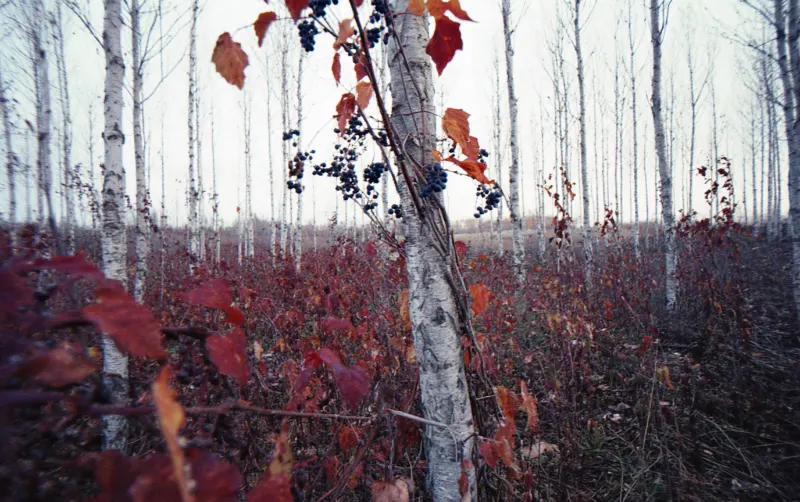
山葡萄, 'mountain grape', grows wild in the forests of China's north-east, eastern Inner Mongolia, the Russian Far East and Korea. It is a separate species from the European wine grape, Vitis vinifera. Its berries are small, dark and very acidic, with little sugar.
Built for the cold
It is considered the most cold-hardy species of the whole grape family. It survives winters that would kill any European vine, and it resists many fungal diseases. In a region where European grapes must be buried every winter, that matters.
The mother of new grapes
Since the 1950s, Chinese breeders have crossed the Amur grape with itself and with European varieties. Shuangqing, Shuangyou and Shuanghong came from early crosses in 1959; later came Zuoyouhong and Beibinghong, the grape bred for red ice wine.
What to expect
Traditional mountain grape wines are usually sweet, deep red and sharply acidic, with wild berry aromas. Newer wines from Amur hybrids include dry reds and red ice wines.
History in China
The Amur grape has always grown wild in north-east China, and local people have long gathered it to make wine. Organised breeding began in the second half of the 20th century, led by the Chinese Academy of Agricultural Sciences, with the aim of combining its cold hardiness with the quality of European grapes. The Beijing Botanical Garden also bred hybrids such as Beichun with Muscat.
Growing
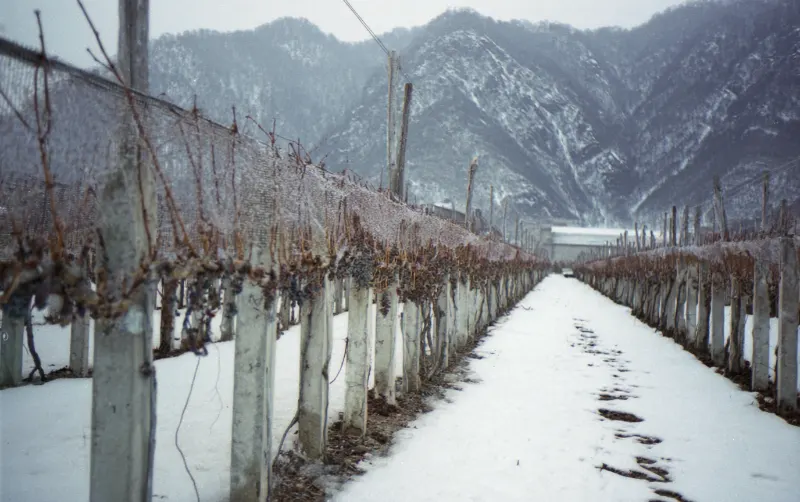
It tolerates extreme cold, around –30 °C and below, and resists powdery mildew, white rot and anthracnose. Amur grape varieties are now planted on thousands of hectares in north-east China, even as far north as 46°N, often without needing to be buried in winter.
Where it grows in China
Food pairings
- Sweet styles with red bean desserts and mooncakes.
- Wild berry tarts.
- Dark chocolate.
Sources
- The Chinese Vitis amurensis — Decanter China
- 'Beibinghong': a new grape cultivar for brewing ice red wine — Vitis (journal), 2014
Similar ingredients
马瑟兰
RED
Marselan
A French grape that may become China's signature
蛇龙珠
RED
Cabernet Gernischt
China's mystery grape, revealed by DNA to be Carmenère
小芒森
WHITE
Petit Manseng
A French white turning into one of China's most exciting wines
赤霞珠
RED
Cabernet Sauvignon
China's most planted red grape and the backbone of its best reds
美乐
RED
Merlot
The soft partner of Cabernet in China's Bordeaux-style blends
霞多丽
WHITE
Chardonnay
China's leading white grape, for still and sparkling wines