Grape variety
Vidal
威代尔wēidài'ěr
The hardy hybrid behind China's ice wine
- Type
- Grape variety
- Colour
- white
- Family
- Other whites
- Origin
- France: a hybrid of Ugni Blanc and Seibel
- In China since
- 2001 (ice wine vineyards in Huanren)
- Main regions
- Heilongjiang, Liaoning
- Literal meaning
- Phonetic transcription
Taste profile
Body
LightFullBody: 4 out of 5Tannin
LowHighTannin: 0 out of 5Acidity
LowHighAcidity: 4 out of 5Fruit
SubtleIntenseFruit: 4 out of 5
Aromas
- honey
- apricot
- citrus
- tropical fruit
- Honey and citrus
- apricot and tropical fruit
- with fresh acidity to balance the sweetness.
Sweetness · Mostly made as sweet ice wine.
Apricot, peach and honey, pineapple and candied orange, with bright acidity that keeps the sweetness fresh.
Vidal is the main grape of Chinese ice wine. A French hybrid of Ugni Blanc and Seibel, it was chosen for its hardiness, and its thick skins let the grapes hang on the vine until they freeze in winter. In China it is grown above all in Huanren, in Liaoning, the country's largest ice wine area, and in Heilongjiang.
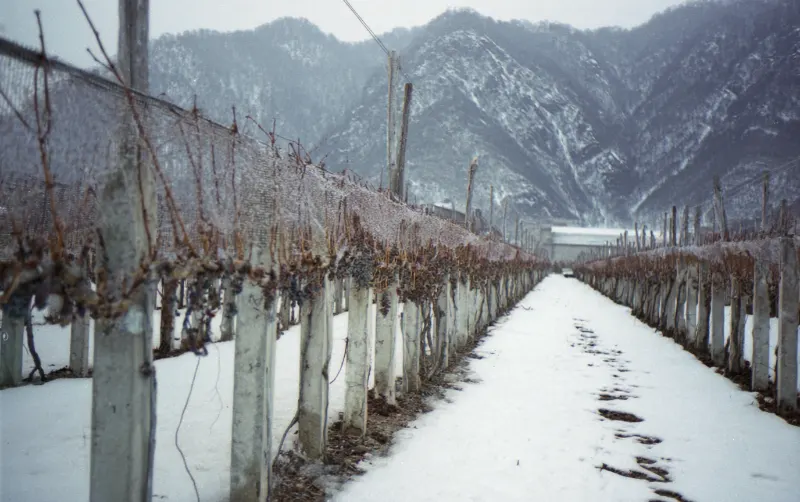
Frozen on the vine
Ice wine is made from grapes left on the vine until they freeze in winter. Pressed while frozen, they give tiny amounts of intensely sweet, concentrated juice.
Huanren
In Liaoning, near the border with North Korea, abundant snow and the moderating Huanren Lake create ideal conditions for ice wine. Vidal, a cold-hardy hybrid grape, is widely planted here and is among China's most planted white grapes.
History in China
The first vineyards dedicated to ice wine were planted in Huanren in 2001. Changyu was among the first producers there; working with the Canadian ice wine producer Aurora, it built its Golden Icewine Valley estate in 2006, where it now sources Vidal from 333 hectares near Huanlong Lake.
Chinese Vidal ice wines have won international recognition: at the 2020 Decanter World Wine Awards, Gold medals went to Liaoning Sanhe's Cailonglin Vidal Icewine 2013 and to Changyu's Black Diamond Golden Icewine Valley Vidal 2017.
Growing
Vidal resists cold and disease and keeps good acidity. For ice wine the grapes are left on the vine until temperatures fall to at least –8 °C, then picked and pressed frozen. In Huanren only about 20% of the harvest can be made into ice wine.
Where it grows
Producers known for it
Pairs with
Food pairings
- Vidal ice wine, with its honey and citrus notes, pairs with fruit desserts, berry mousse, chocolate and mooncakes.
Sources
- China producer profile: Golden Icewine Valley – Huanren, Liaoning — Decanter, 2024
- Liaoning — Berry Bros. & Rudd
- China looks north to sate its ice wine demand — The Drinks Business, 2018
- Ten years on: Chinese wine's breakthrough moment at DWWA — Decanter, 2021
Similar ingredients
马瑟兰
RED
Marselan
A French grape that may become China's signature
蛇龙珠
RED
Cabernet Gernischt
China's mystery grape, revealed by DNA to be Carmenère
小芒森
WHITE
Petit Manseng
A French white turning into one of China's most exciting wines
赤霞珠
RED
Cabernet Sauvignon
China's most planted red grape and the backbone of its best reds
美乐
RED
Merlot
The soft partner of Cabernet in China's Bordeaux-style blends
霞多丽
WHITE
Chardonnay
China's leading white grape, for still and sparkling wines