Grape variety
Cabernet Franc
品丽珠pǐnlìzhū
The fragrant Bordeaux grape that adds freshness and perfume to China's finest blends
- Type
- Grape variety
- Colour
- red
- Family
- Other reds
- Origin
- France: Bordeaux and the Loire Valley
- Synonyms
- Bouchet, Breton
- Literal meaning
- A phonetic name; the characters suggest refined beauty and a pearl
Taste profile
Body
LightFullBody: 3 out of 5Tannin
LowHighTannin: 3 out of 5Acidity
LowHighAcidity: 4 out of 5Fruit
SubtleIntenseFruit: 3 out of 5
Aromas
- raspberry
- red cherry
- violet
- cedar
- green pepper
- Red berries and violet
- with cedar
- pine and a light herbal note of green pepper.
Sweetness · dry
Cabernet Franc is one of the great grapes of Bordeaux and the Loire, and a parent of Cabernet Sauvignon. In China it is mostly a supporting player, adding fragrance and freshness to Bordeaux-style blends, including the country's most famous wines, Ao Yun and Long Dai. A few estates now bottle it on its own, and Grace Vineyard's single-varietal Cabernet Franc from Ningxia has won Gold at the Decanter World Wine Awards.
A classic from France
Cabernet Franc is one of the oldest grapes of south-west France. On the Right Bank of Bordeaux it shapes some of the most famous wines in the world, and in the Loire Valley it makes fragrant, fresh reds on its own. It is also a parent of Cabernet Sauvignon, born from a natural cross with Sauvignon Blanc.
A supporting role in China
In China, Cabernet Franc is grown in most quality regions, but usually in small quantities, as a blending partner. It brings perfume, freshness and finer tannins to wines built on Cabernet Sauvignon and Merlot. It is part of the blend of Ao Yun, the LVMH wine from the Himalayan foothills of Yunnan, and of Long Dai, the Shandong wine of the Rothschilds of Château Lafite; Domaine Franco-Chinois in Hebei also grows it.
Stepping into the spotlight
A few producers have started to bottle Cabernet Franc on its own. The best-known example is Grace Vineyard's Tasya's Reserve Cabernet Franc from Ningxia: the 2016 vintage won a Gold medal with 96 points at the Decanter World Wine Awards, a sign of what the grape can do in China's desert vineyards.
Not to be confused
Cabernet Franc is often linked in China to Cabernet Gernischt, the historic grape brought to Shandong by Changyu in 1892. For a long time the two were thought to be related or even identical, but DNA profiling has shown that Cabernet Gernischt is in fact Carmenère.
History in China
Cabernet Franc arrived in China with the other Bordeaux varieties that spread through the country's vineyards in the late 20th and early 21st centuries. When Domaine Franco-Chinois was created in Huailai, Hebei, with vines imported from France in 2001, Cabernet Franc was among the Bordeaux red varieties planted, and it is still one of the six varieties the estate grows today.
The grape gained visibility through China's most ambitious projects. Ao Yun, launched by Moët Hennessy with the 2013 vintage, has included it in its blend from the start; the 2018 contained 19% Cabernet Franc. Long Dai, the first wine of Domaines Barons de Rothschild (Lafite) in Shandong, released in 2019 with the 2017 vintage, is a blend of Cabernet Sauvignon, Marselan and Cabernet Franc.
Growing
Cabernet Franc buds and ripens earlier than Cabernet Sauvignon, which can be an advantage in regions with short seasons or autumn rain, such as Shandong. In the desert regions of Ningxia it ripens fully while keeping its freshness, and in the high valleys of Yunnan the strong sunlight and cool nights give it intense colour and perfume.
Where it grows
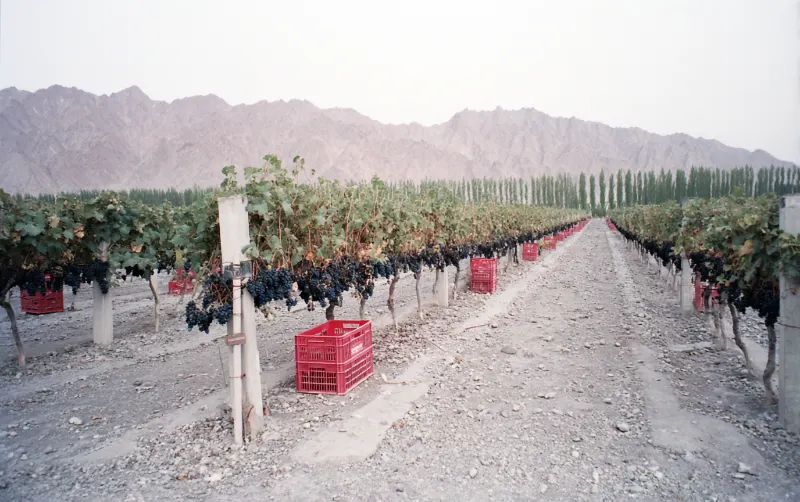
Ningxia
宁夏
Helan Mountain East · 贺兰山东麓 · Hèlánshān dōnglù
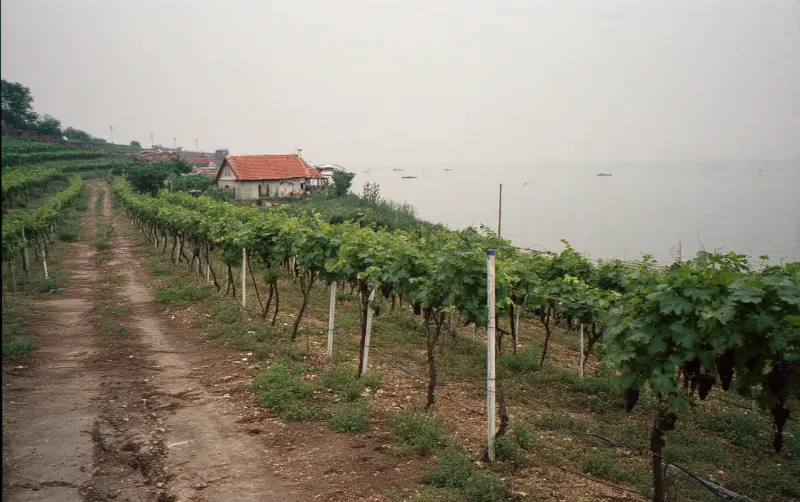
Shandong
山东
Yantai and Penglai · 烟台 · 蓬莱 · Yāntái · Pénglái
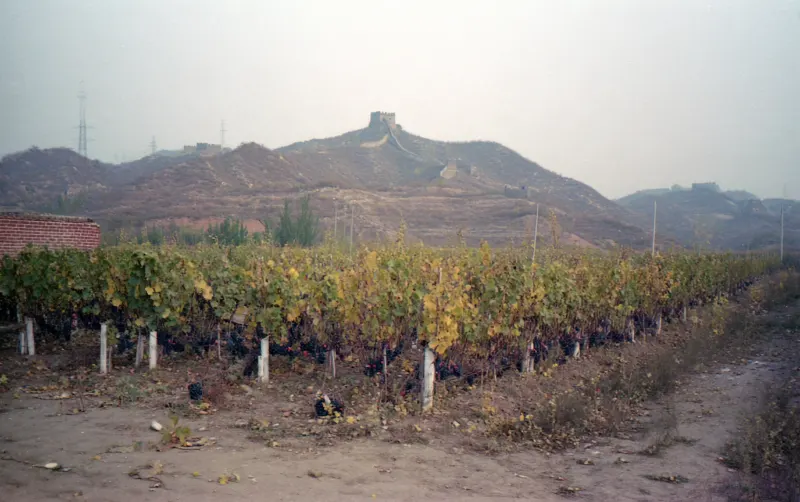
Hebei
河北
Huailai and Changli · 怀来 · 昌黎 · Huáilái · Chānglí
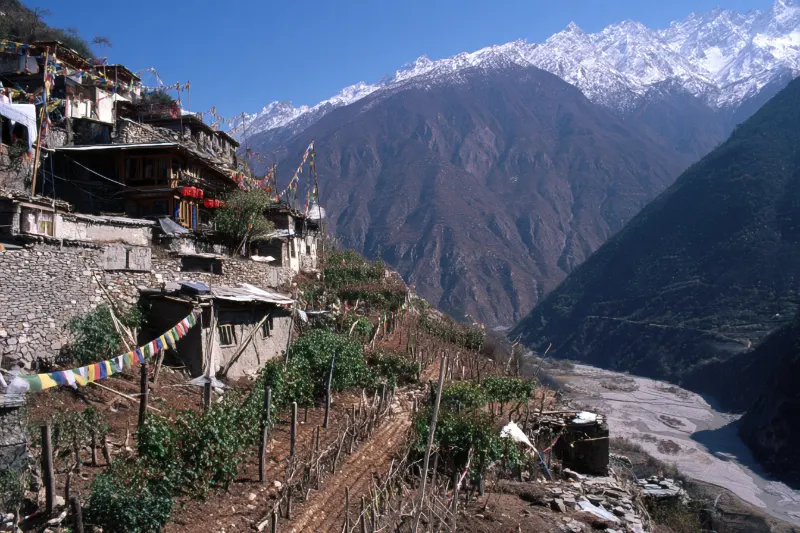
Yunnan
云南
Shangri-La and the Himalayan foothills · 香格里拉 · Xiānggélǐlā
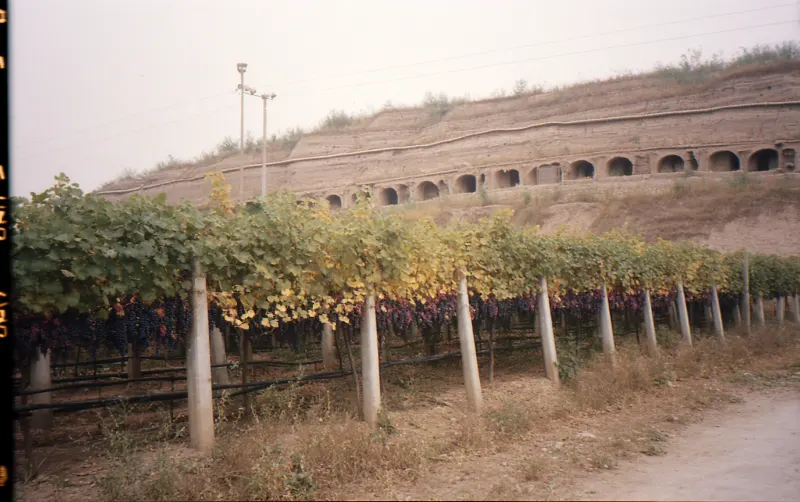
Shanxi
山西
The Taiyuan Basin and the Loess Plateau · 太原盆地 · Tàiyuán péndì
Producers known for it
Yunnan
Ao Yun
敖云
Flying above the clouds: China's most collectable wine
Ningxia
Chateau Hedong
贺东庄园
One of Ningxia’s oldest estates, with vines more than a century old
Shanxi
Chateau Rongzi
戎子酒庄
A Loess Plateau estate in southern Shanxi, advised by the former winemaker of Pétrus
Shandong
Domaine de Long Dai
珑岱
Château Lafite's Chinese estate, on granite terraces by the sea
Hebei
Domaine Franco-Chinois
中法庄园
Born from a pact between two governments, the estate that brought Marselan to China
Gansu
Guofeng
国风庄园
A large Hexi Corridor estate in Zhangye, on the old Silk Road
Xinjiang
Zhongfei Winery
中菲酒庄
A vineyard won from the Gobi, stone by stone, in Xinjiang’s Yanqi Basin
Shanxi
Grace Vineyard
怡园酒庄
China's pioneering family boutique winery, born in coal country
Food pairings
- Peking duck, where the fresh red fruit meets the sweet sauce.
- Red-braised pork belly.
- Mushroom dishes and roast meats with herbs.
Sources
- Grace Vineyard, Tasya's Reserve Cabernet Franc, Helan Mountain East, Ningxia, China 2016 (DWWA Gold) — Decanter China, 2019
- Savour the diversity of Chinese wines — Decanter, 2024
- Ao Yun becomes China's first grand cru release on La Place de Bordeaux — The Drinks Business, 2022
- Lafite Rothschild owner reveals Chinese winery name — Decanter, 2019
- Domaine Franco-Chinois — Wynn Signature Chinese Wine Awards
Similar ingredients
马瑟兰
RED
Marselan
A French grape that may become China's signature
蛇龙珠
RED
Cabernet Gernischt
China's mystery grape, revealed by DNA to be Carmenère
小芒森
WHITE
Petit Manseng
A French white turning into one of China's most exciting wines
赤霞珠
RED
Cabernet Sauvignon
China's most planted red grape and the backbone of its best reds
美乐
RED
Merlot
The soft partner of Cabernet in China's Bordeaux-style blends
霞多丽
WHITE
Chardonnay
China's leading white grape, for still and sparkling wines