Grape variety
Saperavi
沙布拉维shābùlāwéi
Georgia's red-fleshed grape, making gold-medal wine in the oasis of Turpan
- Type
- Grape variety
- Colour
- red
- Family
- Other reds
- Origin
- Georgia: Kakheti
- Main regions
- Xinjiang
- Literal meaning
- A phonetic rendering of 'Saperavi'
Taste profile
Body
LightFullBody: 5 out of 5Tannin
LowHighTannin: 4 out of 5Acidity
LowHighAcidity: 4 out of 5Fruit
SubtleIntenseFruit: 5 out of 5
Aromas
- black cherry
- plum
- blackberry
- spice
- meaty notes
- Jammy red and black fruit
- spice and savoury
- meaty notes.
Sweetness · dry
Saperavi is the great red grape of Georgia, one of the oldest wine countries on Earth. It is a rare 'teinturier': its flesh is red as well as its skin, giving wines of inky colour. In China it has found an unexpected home in Turpan, in Xinjiang, where Puchang Vineyard's Saperavi won a Gold medal with 96 points at the Decanter World Wine Awards.
A grape from the Caucasus
Saperavi comes from Kakheti, in eastern Georgia. Its name means something like 'dye' or 'colour', because its juice is red: most red grapes have clear juice and get their colour only from the skins. It makes deep, powerful wines with high acidity that can age for decades.
Along the Silk Road to Turpan
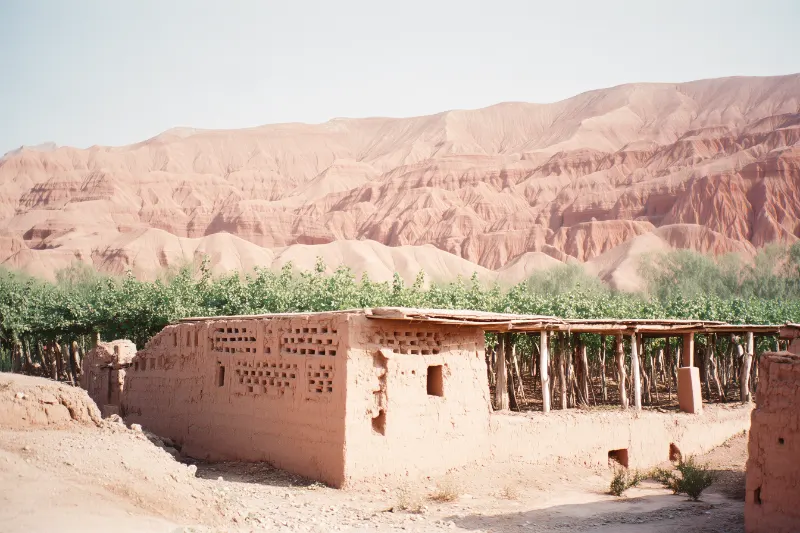
Turpan, in Xinjiang, is one of the hottest and driest places in China, an oasis below sea level fed by ancient underground channels. It is also China's oldest grape country. Here, Puchang Vineyard grows Saperavi, a fitting link between two ancient vine lands of the Silk Road.
A gold medal
Puchang's Viaseres Reserve Saperavi 2017 won a Gold medal with 96 points at the Decanter World Wine Awards, described as powerful and spicy, with jammy red and black fruit, meaty nuances and great concentration.
What to expect
Inky colour, ripe dark fruit, spice and fresh acidity, with a firm, rich structure.
History in China
Saperavi is one of the oldest grapes of Georgia, where wine has been made for around 8,000 years. In China it is a rarity, grown mainly in the Turpan basin of Xinjiang, where Puchang Vineyard has made it one of its signature wines.
Growing
Saperavi is cold-hardy and keeps high acidity even in hot climates, which suits Turpan's scorching summers and freezing winters. The vineyards rely on irrigation, and, as elsewhere in northern China, the vines are buried in winter.
Where it grows
Producers known for it
Food pairings
- Xinjiang lamb skewers with cumin.
- Big plate chicken.
- Roast lamb and spiced stews.
Sources
- Puchang Vineyard, Viaseres Reserve Saperavi 2017 (DWWA Gold, 96 points) — Decanter China, 2023
- Puchang Vineyard, Reserve Saperavi 2014 (DWWA Commended) — Decanter China, 2018
- Saperavi — Decanter
Similar ingredients
马瑟兰
RED
Marselan
A French grape that may become China's signature
蛇龙珠
RED
Cabernet Gernischt
China's mystery grape, revealed by DNA to be Carmenère
小芒森
WHITE
Petit Manseng
A French white turning into one of China's most exciting wines
赤霞珠
RED
Cabernet Sauvignon
China's most planted red grape and the backbone of its best reds
美乐
RED
Merlot
The soft partner of Cabernet in China's Bordeaux-style blends
霞多丽
WHITE
Chardonnay
China's leading white grape, for still and sparkling wines