Step 3 · How they are made
What is qu?
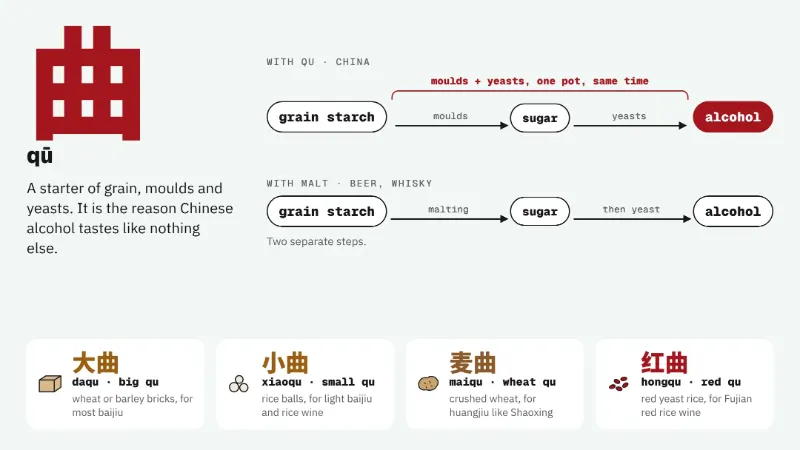
If you remember one word from this course, make it 曲 (qū). It is the secret behind baijiu and rice wine, and it has no real equivalent in European drinks.
Qu is a fermentation starter. Grain, such as wheat, barley, peas or rice, is moistened, shaped into bricks or small balls and left to grow wild moulds, yeasts and bacteria for weeks.
Why it matters. To make alcohol from grain you need two things: first turn the starch into sugar, then turn the sugar into alcohol. Beer does this in two steps, using malted barley first. Qu does both at the same time, in the same vessel. This is the heart of Chinese brewing and distilling.
The main kinds. Daqu (大曲, "big qu") comes in large bricks, usually made from wheat, barley or peas, and is used for most famous baijiu. Its making temperature shapes the aroma: high-temperature daqu is used for sauce aroma baijiu. Xiaoqu (小曲, "small qu") comes in small balls, usually made from rice, and is used for lighter baijiu and for rice wine.
If you know Japanese sake, qu is a distant cousin of koji, but richer in different microbes.