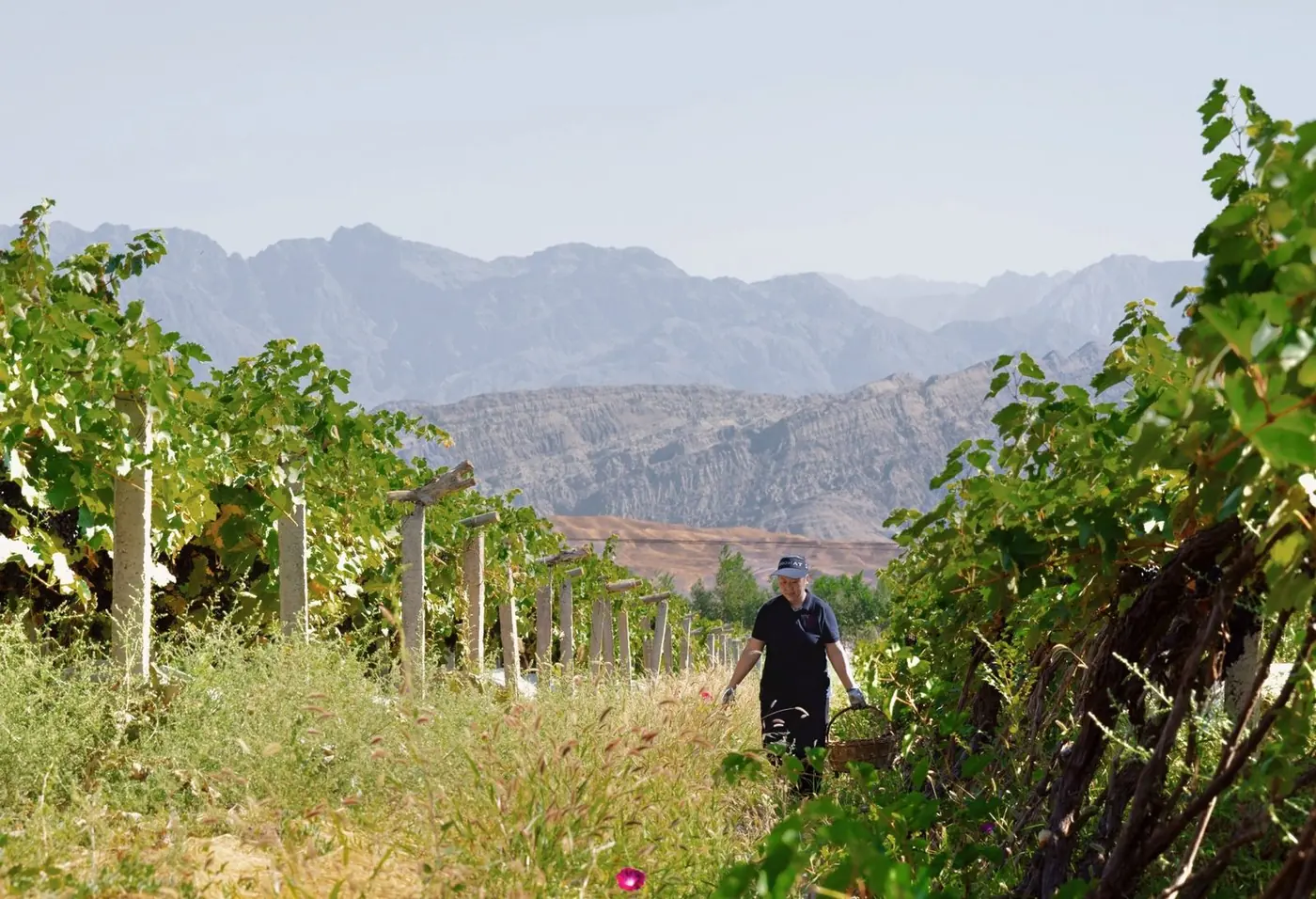
interview · turpan, xinjiang 吐鲁番 · 新疆
The desert taught us patience, the Silk Road taught us openness
Clara Wang of Puchang Vineyard
In the Turpan Valley, one of the hottest and driest places in China, Puchang Vineyard farms some of the country's oldest commercial vineyards, organically, and has become the reference for Georgian grapes in China: Saperavi and Rkatsiteli. Clara Wang, chief manager of Puchang, tells us about desert viticulture, burying vines by hand, native yeasts and lamb kebabs.
The Story
How did Puchang begin? When was the winery founded, and why in Turpan?
The vines are older than the winery. The estate was planted in 1975 as part of the Hongliuhe state horticultural farm near Turpan, which is why we still farm some of China's oldest commercial vineyards: today about 67 hectares across five plots, with an average vine age of around 30 years. In 2008, Hong Kong entrepreneur K.K. Cheung tasted a sweet Muscat from the old Turpan winery and was astonished by its quality. He bought the estate and renamed it Puchang Vineyard, and the first vintage under the new name was 2009.
Why Turpan? It sits at 41–43°N, close to the latitude of Bordeaux, with 2,000 years of grape-growing history, karez irrigation from the Tian Shan mountains, and a climate so dry that disease pressure is almost nil. That combination made organic farming realistic, which was the whole point: Mr Cheung wanted to prove that fine, healthy wine could come from China. After five years of inspection we were Ecocert certified in 2013, launched internationally in 2016, and were named China Winery of the Year at the 2017 Berlin International Wine Competition.
The Grapes
Saperavi is a Georgian grape. How did it arrive in Turpan, and why did you choose it?
Georgian varieties reached China in the 1950s through Sino-Soviet scientific exchange, Rkatsiteli in 1956 and Saperavi in 1957, and found a second home in Xinjiang's vineyards. Our Saperavi vines are now 25–30 years old. We chose to champion them for two reasons. First, viticulture: Saperavi is late-ripening, thick-skinned and naturally high in acidity, which is exactly what you want in a desert where grapes ripen fast and acidity is precious.
Second, the story: these grapes travelled the same Silk Road corridors that link Georgia and Xinjiang, so a Puchang Saperavi is genuinely a wine of that history. Independent critics have noted that we are essentially the only winery in China making serious, award-winning wines from these Georgian varieties. Saperavi and Rkatsiteli are also our best sellers at home.
The Desert
Turpan is one of the hottest and driest places in China. How do the heat and the desert shape your vineyards and your wines?
Turpan is extreme by any measure: the Turpan Depression reaches 154 metres below sea level, one of the lowest places on Earth, summer days can push well past 45°C, winter nights fall to around −20°C, and we get only 16–20 mm of rain a year. June, the wettest month, brings about 4 mm. We get 3,000–3,200 hours of sunshine and a growing season of nearly 270 days, with big day–night swings that let the fruit ripen fully while holding on to acidity.
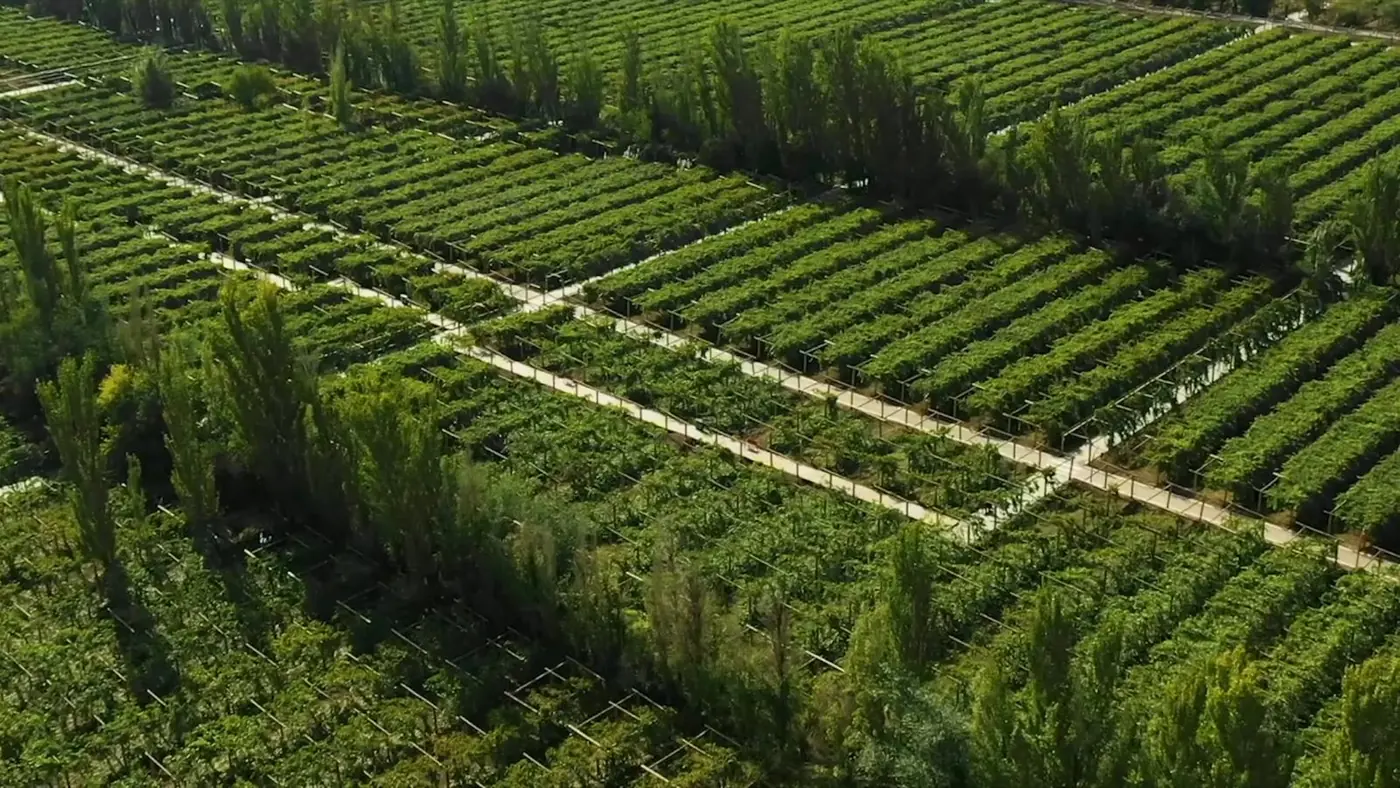
The desert is also our shield: with almost no humidity, fungal disease is unheard of, pests barely survive, and we use no pesticides or herbicides at all. The organic certification almost makes itself. The heat gives our wines what Loris Tartaglia, our chief winemaker, calls their character: solar, exotic, rich, fruity and full-bodied. But the diurnal shift keeps them supple and fresh, never jammy. We also adapt training and pruning so the canopy shields the fruit from sunburn, and we plant trees as windbreaks against the desert winds. The key plot of our vineyard is at 1,000 metres above sea level, which protects it from the extreme heat of Turpan.
How do you manage water, harvest timing and the winter? Do you bury the vines?
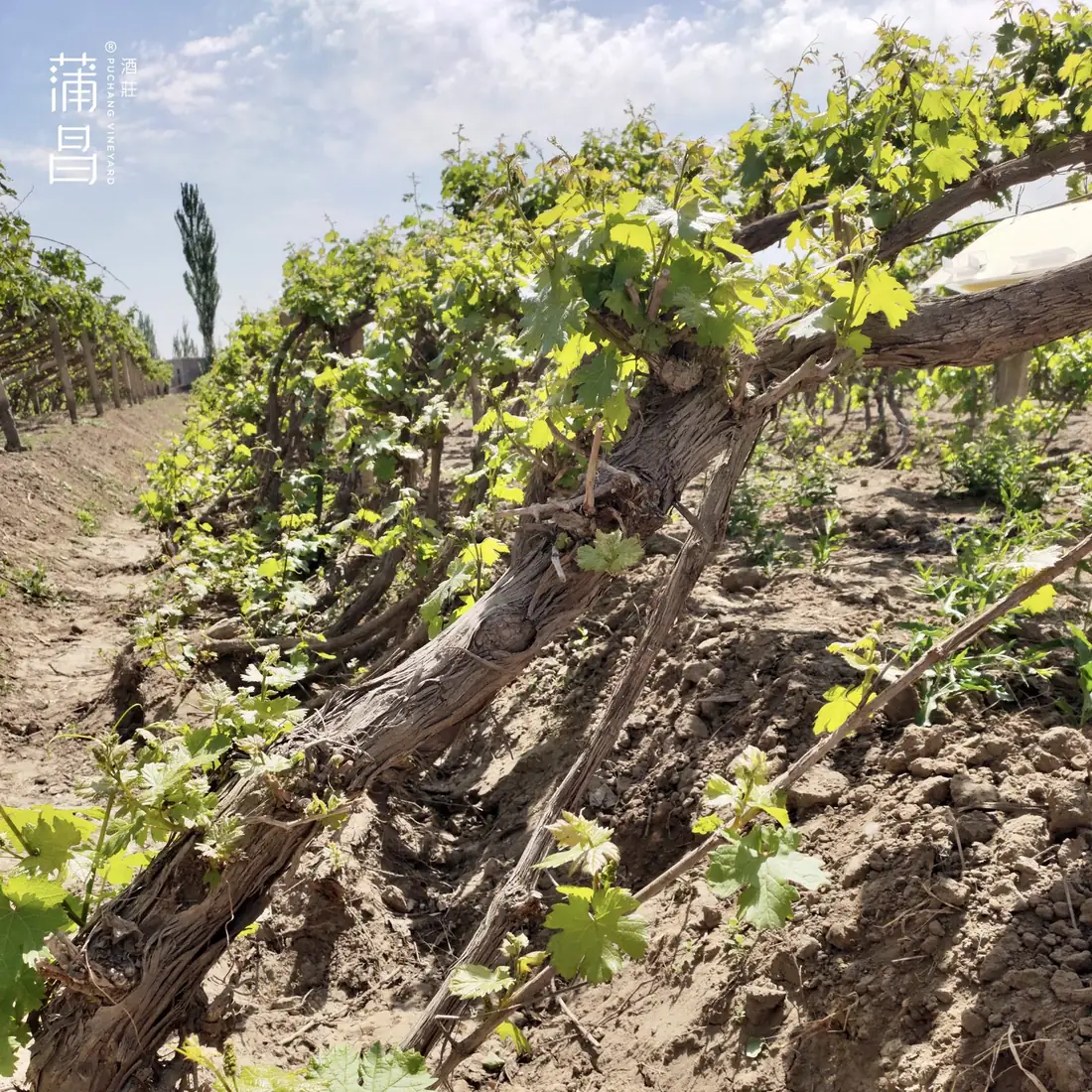
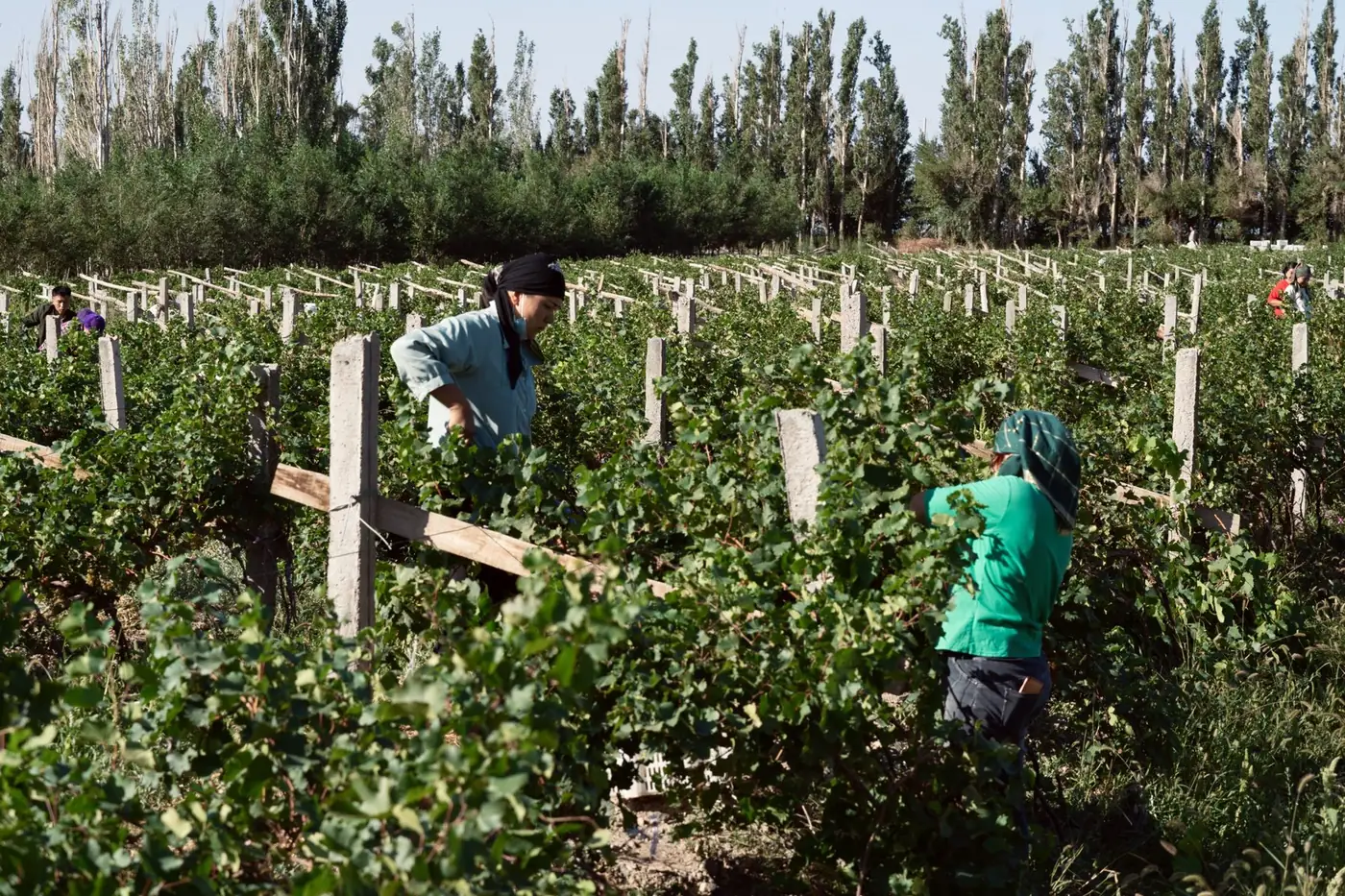
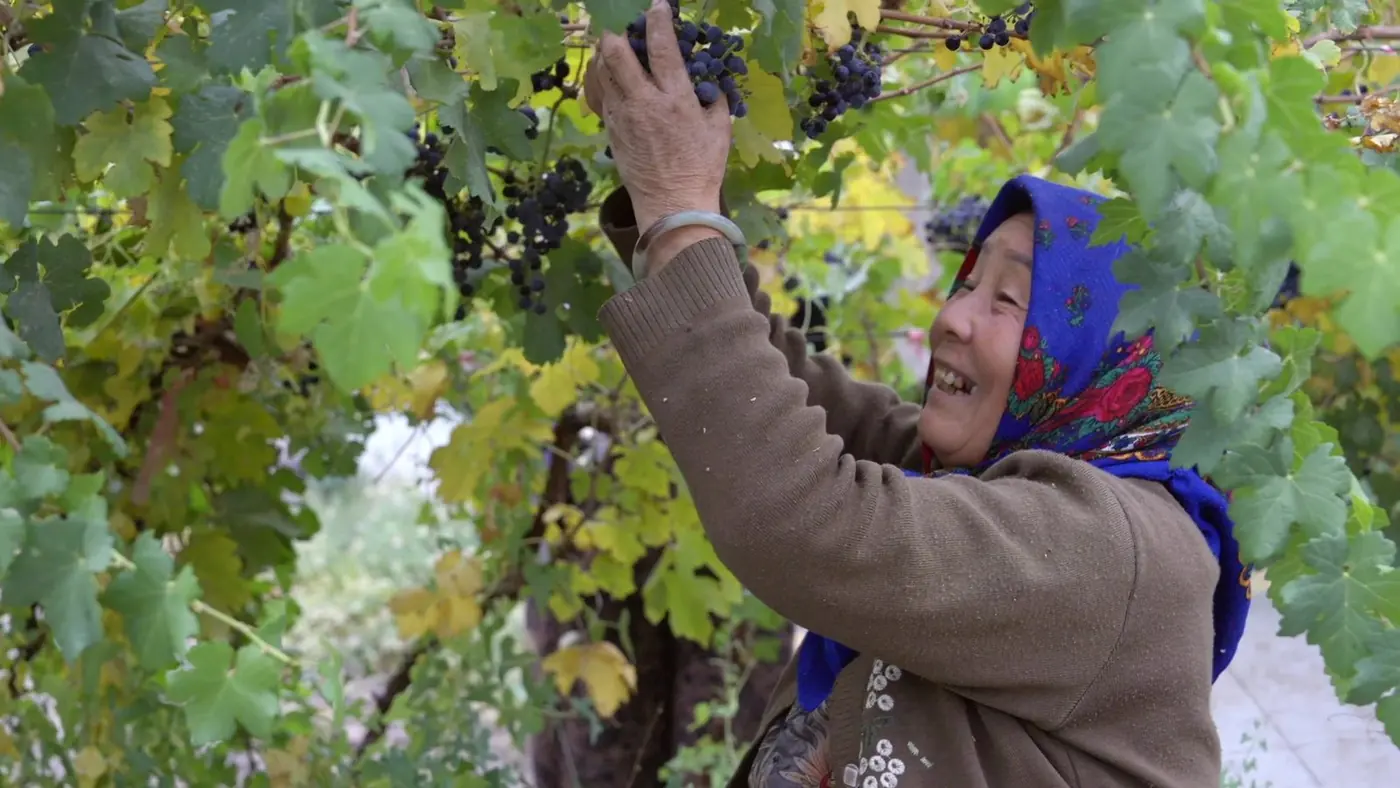
Water comes from the Tian Shan snowmelt, channelled through the karez 坎儿井, the 2,000-year-old underground canal system, into stone-lined irrigation ditches that cross our estate. The water arrives pure and cold, untouched by industry. We monitor every block closely: from véraison each variety is analysed in the lab every week, and every three days from July, so we pick on the balance of sugar, acidity and pH rather than on a calendar. Everything is handpicked and hand-sorted, often in several passes: the Muscat in three passes, and the Beichun picked Yquem-style through a window from mid-August to mid-September, because its tannins ripen unevenly.
And yes, we bury the vines: in December the whole team buries them by hand, under a protective blanket, and unearths them again in spring. The one exception is Beichun 北醇, which was bred in 1954 from Muscat of Hamburg and the cold-hardy Vitis amurensis precisely to survive these winters unburied. Even our uprooted vines are shredded back into the soil as nutrients.
The Wines
Besides Saperavi, which varieties do you grow, and which wines do you make?
Two of our grapes are true chameleons. From Beichun we make three wines, a red, a white and a rosé, while Rkatsiteli gives us four expressions of one variety: two different whites, a pét-nat and an orange wine. There is also the local aromatic grape Rou Ding Xiang 柔丁香, which we make into dry white and sweet wines. We also grow Cabernet Sauvignon, including a Reserve, and Pinot Noir, and Tempranillo is in trial. Overall production is deliberately limited, at roughly 100,000 bottles a year.
What is your philosophy in the cellar: oak, fermentation, how much do you intervene?
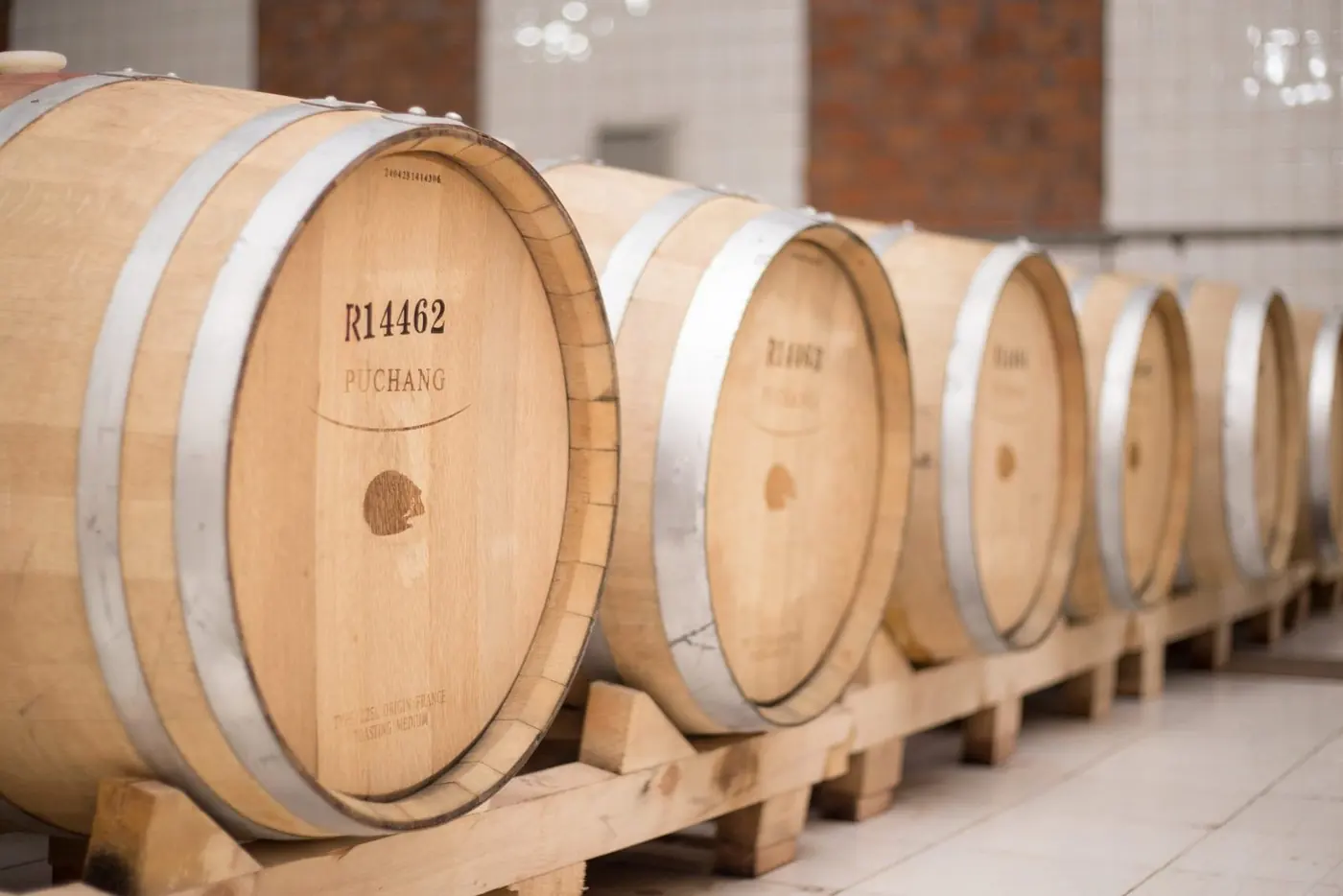
Minimal intervention, maximum attention. Fermentations run with native yeasts from our own grape skins. As Loris Tartaglia, our chief winemaker, says, "our friends the yeasts are the true winemakers." The wines are bottled with low sulphites. The organic fruit makes this possible: nothing on the grape, nothing to correct. Oak is French and used with restraint. The Saperavi is aged half in second-use Bordeaux barriques and half in second-use 3,000-litre tonneaux; the Rkatsiteli goes through about 30% malolactic fermentation and spends 24 months between steel and French oak; the Beichun, which has firm tannins, gets a long élevage, around 30 months in tank and second-use barrels, then another 18 months in bottle before release.
If a European wine lover could taste only one Puchang wine, which would you choose?
The Saperavi. It's our signature and our bridge to Europe: a grape many wine lovers have now met through Georgia, grown on Gobi gravel in one of the world's most extreme terroirs. It's deeply coloured, high in acidity and structured, with dark cherry, blackberry, dark chocolate and sweet spice. It answers the question "what does Chinese terroir taste like?" in one glass. For a white-wine drinker, the Rkatsiteli: the 2023 was recently picked by Wine Spectator's Zekun Shuai as his "wine crush", and a Puchang wine placed No. 8 in James Suckling's Top 100 Wines of China 2025.
Wine and Food
What food would you pair it with: one dish from Xinjiang, and one European dish?
From Xinjiang: lamb kebabs, yangrou chuanr 羊肉串, hot off the charcoal with fresh flatbread. We've served exactly that at winery lunches, and it's the pairing that makes the Saperavi make sense: cumin and charred lamb with the wine's dark fruit and spice, the food of the Silk Road on the same plate.
From Europe: slow-roasted or herb-crusted lamb, a Provençal gigot or a Greek-style roast, or a braised oxtail stew. Saperavi's acidity and fine tannins cut straight through roasted and braised meat.
China and The World
Who drinks Puchang wines today, in China and abroad? Are they available in Europe?
At home, our wines are poured in select high-end restaurants and luxury hotel groups across mainland China and Hong Kong, ordered by sommeliers who, as our Singapore importer puts it, are "begging for stories." Abroad, we've deliberately stayed boutique: Singapore is our most established export market, with placements in Australia, Japan and Mexico. We exported to London before the pandemic, and a return to Europe is very much on our minds, but it takes time to find the right partners.
What do people outside China most often misunderstand about Chinese wine, or wine from Xinjiang?
Three things. First, the old verdict: "Chinese wine is terrible, just Cabernet and Marselan clones of Bordeaux." The reality is a generation of wineries doing things differently: we chose desert-suited, Silk Road varieties and organic farming instead.
Second, the assumption that desert heat must produce brutal, raisiny, overripe wines. One of our Singapore buyers expected "marsala-like" flavours and instead found wines that were "gentle, supple and layered."
Third, that there's no history here: grapes have been grown in Turpan for some 2,000 years, and Marco Polo described the vineyards, long before wine was made from them.
Can visitors come to the winery? When is the best time of year?
Yes, by prior arrangement. The team regularly hosts tastings, so contact us through our website or Instagram to set a date. The estate is in the Turpan Valley, about 150 km southeast of Urumqi, and a visit combines naturally with the ancient ruins of Jiaohe, the karez wells, the Flaming Mountains and the Grape Valley.
The best window is harvest, roughly from late August to October: that's when you'll see the picking passes, the sorting tables and the cellar at full speed, and the weather is pleasant. Spring is mild and beautiful. July we cannot in good conscience recommend to anyone, at 45°C and more.
Looking Ahead
What is next for Puchang in the coming years?
We continue to work with our grapes, exploring new products for the future. That has always been our way: it's why you see a skin-contact Rkatsiteli, a pét-nat, or trials with new varieties like Tempranillo coming from our cellar. We would rather produce a little less and keep experimenting than stand still. The desert taught us patience, and the Silk Road taught us openness: the next years are about new styles, new expressions of Turpan, and bringing them to wine lovers wherever they are.
Puchang Vineyard is featured in our atlas of Chinese wine producers →
Want to taste Chinese wine in Europe? See where to find it →
Follow Puchang Vineyard: @puchangwine
- xinjiang
- turpan
- saperavi
- rkatsiteli
- beichun
- organic
- interview
Interview conducted in October 2026 and edited for length and clarity. Photos courtesy of Puchang Vineyard.