马祖老酒
mǎzǔ lǎojiǔ
Wine jars in a tank tunnel
3 min read
In 10 seconds
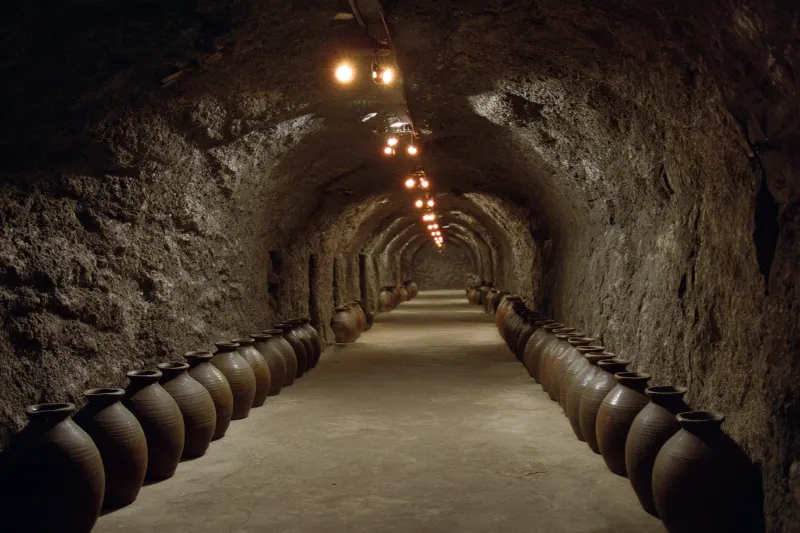
On Matsu, jars of rice wine age inside a 200-metre granite tunnel built for tanks.
The tunnel is cut into granite. It runs for about 200 metres, it was once used for tanks, and the temperature inside barely moves. Along its walls, instead of armour, stand rows of earthenware jars. Inside them, slowly, rice wine is ageing.
A wine of the islands
On the Matsu Islands, the signature drink is 马祖老酒 (mǎzǔ lǎojiǔ), Matsu "old wine". According to the Matsu National Scenic Area, it is made from glutinous rice, red yeast and koji, and its aroma is described as "mellow, medicinal".
That short description is all our sources offer on taste, and it is worth respecting rather than embroidering. "Medicinal" here is a description, not a criticism. The alcohol content, and the founding year of the Matsu Distillery, could not be verified, so neither appears here.
What the official sources stress instead is how deeply the wine is woven into daily life. It is used, they say, in everyday meals, in wellness and at festivals.
From the glass to the wok
On Matsu, laojiu is as much an ingredient as a drink. The scenic-area guide lists dishes that depend on it: fried rice made with the red lees left over from brewing, an old-wine vermicelli soup, and drunken shrimp.
For a European cook, this is familiar territory. Think of the way Marsala, Madeira or a splash of white wine sits at the heart of certain regional kitchens, not as a luxury but as a pantry staple. On Matsu the same logic reaches even the red lees: what is left after brewing ends up on the plate.
Tunnel 88
Then there is the cellar. 八八坑道 (Bā Bā Kēngdào), Tunnel 88, lies on Nangan. The Matsu National Scenic Area describes it as a granite tunnel about 200 metres long, formerly used for tanks and named for Chiang Kai-shek's 88th birthday.
Today it stores the Matsu Distillery's rice wine and kaoliang in earthenware jars, next to the distillery itself, at a steady 15–20 °C.
Rows of clay jars rest in granite, in a tunnel once built for tanks.
Any European who has walked through the chalk cellars under Reims, or the tufa caves of the Loire, will understand the logic at once. Stone holds temperature. A steady environment means slow, even ageing. What is unusual is the history of the space: a tunnel built for military vehicles that now shelters wine.
The image is both martial and intimate. Long lines of jars, each sealed, each patient, in a corridor of rock.
A red-yeast thread
The Matsu Distillery also makes Matsu Kaoliang, a sorghum spirit, and the tunnel holds both. But the laojiu tells a longer story. Red-yeast yellow wine, the craft listed as national intangible heritage in China in 2021, is described in that listing as practised not only in Fujian but also in Taiwan and among Chinese communities in South-East Asia.
Matsu is historically Fuzhou-speaking, which makes a link to Fuzhou-style red-yeast wine plausible. That link is consistent with the sources, but it has not been directly verified, so it is best held lightly.
What can be said with confidence is that this small archipelago keeps a wine with a clear identity: glutinous rice and red yeast, a medicinal, mellow aroma, a place in the kitchen as well as at the table, and a cellar unlike any other.
Matsu laojiu belongs to a much larger family. The red-yeast wines of Fujian, the aged yellow wines of Shaoxing, the sweet sealed wines of Jiangsu: all are part of the great road of Chinese rice wine, and this one simply happens to sleep in a tunnel.
How it's made
- Steam glutinous rice.
- Ferment with red yeast and koji.
- Press the wine.
- Age it in clay jars inside Tunnel 88.
How it's drunk
Drunk on its own and used in local cooking, such as red-lees fried rice.
Its European cousin
Like Champagne aged in chalk caves, but in a military tunnel.