客家娘酒
kèjiā niángjiǔ
The wine of coming home
3 min read
In 10 seconds
Hakka families brew this sweet rice wine before New Year, for the relatives coming home.
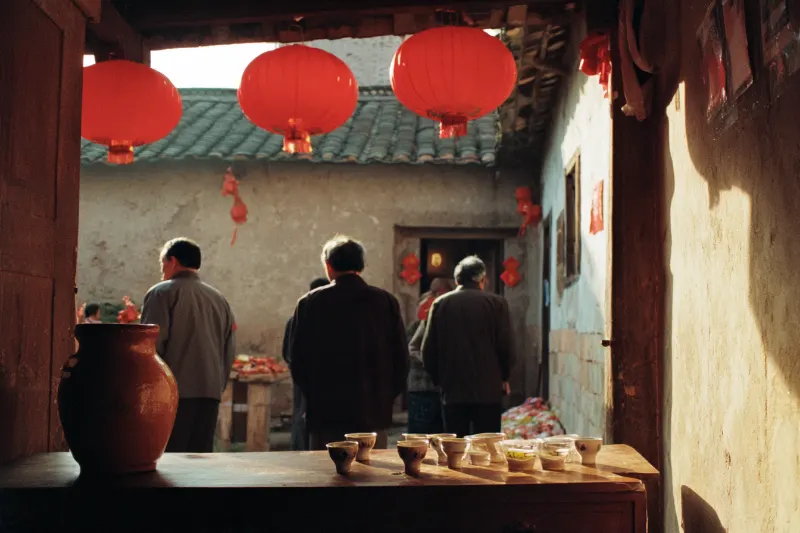
In the weeks before Chinese New Year, the villages around Meizhou in eastern Guangdong start to smell of steamed rice. Families are getting ready for the people who will come back: sons and daughters who work in distant cities, cousins who left long ago. On the table, when they arrive, there will be a sweet rice wine brewed for the occasion. Its name is 客家娘酒 (kèjiā niángjiǔ), Hakka niangjiu.
A wine for those who left
The Hakka, 客家 (Kèjiā), are a Han Chinese people, and the heritage of this wine belongs to Meizhou. Many families there have relatives who live and work far away, and that gives this wine its meaning. According to a report in The Paper, rural families in Meizhou brew niangjiu before the New Year as a sign of festivity and of migrants coming home for the reunion.
It is a drink defined less by technique than by timing. It is made so that it will be ready when the family is complete again.
Rice, spring water, sweetness
The facts recorded about the drink are few and simple. Niangjiu is made from glutinous rice and mountain spring water, fermented in the traditional way. The same report describes a bright colour and a taste that is sweet, soft and mellow.
For European readers, the closest cousins may be the sweet, gently alcoholic drinks that belong to winter festivals. Think of a glass of mulled wine at Christmas, or a homemade fortified wine kept for family visits. It is not the most complex drink in the cellar. It is the one that tastes of home.
It is brewed so that it will be ready when the family is complete again.
No source consulted for this guide gives an alcohol strength, so none is given here. That matters, because the word *jiu* covers everything from low-strength sweet rice wines to strong spirits.
A heritage on the provincial list
In 2013 the niangjiu brewing craft of Meixian, now Meixian District of Meizhou, was added to Guangdong's provincial list of intangible cultural heritage. That places it at the provincial level, not on the national list. It is a modest badge, but a real one, and it recognises a family practice rather than an industrial product.
Other uses are often mentioned. Hakka niangjiu is widely said to be part of the postpartum month, when new mothers are given chicken cooked with the wine and ginger. That custom is repeated in many places, but the sources behind this guide did not confirm it, so it should be read as a common account rather than an established fact.
From Meizhou to the world
Hakka rice wine also travels beyond Guangdong. A commercial Hakka rice wine, sold under the name Pearl Red, is on the shelves of Dan Murphy's in Australia. That shows that a bottled version travels. Whether it, or anything like it, is sold in Europe has not been verified.
For a sommelier, the honest note is that there is little tasting data to work with. The sources say sweet, soft, mellow, bright in colour. Beyond that, the experience will depend on the family or the brand. That is part of the charm of a household wine: no two jars are quite the same.
There are drinks that tell you about a place, and drinks that tell you about the people who left it. Niangjiu is the second kind. It is brewed for a date on the calendar and for faces at the table, a small, sweet promise that the absent will come back.
Hakka niangjiu belongs to the great family of Chinese rice wines, made from glutinous rice, starter and water in countless regional versions. Some are aged for years in sealed jars. This one is brewed for a single season and a single purpose: coming home.
How it's made
- Steam glutinous rice.
- Mix with starter and ferment.
- Press the sweet wine.
- Store it for the New Year.
How it's drunk
At New Year and family reunions.
Its European cousin
Like mulled wine at Christmas: a sweet drink that means home.